Why Is Changing the Gas Regulator Not Enough for LPG to NG Conversion?
- Short Answer
- What Is LPG to NG Conversion?
- Why Changing the Gas Regulator Alone Does Not Complete LPG to NG Conversion?
- What Does a Gas Pressure Regulator Actually Do?
- Typical LPG vs NG Pressure Reference
- Why LPG and NG Require Different Settings
- What Components Are Required for a Complete LPG to NG Conversion?
- LPG to NG Conversion: Professional Checklist
- Common Problems After Incorrect Gas Conversion
- How to Verify a Safe LPG to NG Conversion?
- Can Every Gas Hob Be Converted from LPG to NG?
- What Importers Should Confirm Before Ordering Gas Hobs?
- FAQ
- Conclusion
Short Answer
Quick answer: No. Changing the gas regulator alone is not enough for LPG to NG conversion because it only controls pressure — not gas flow or combustion.
A proper LPG to NG conversion requires:
- Correct injectors (orifices)
- Air–gas ratio adjustment
- Pressure verification and leak testing
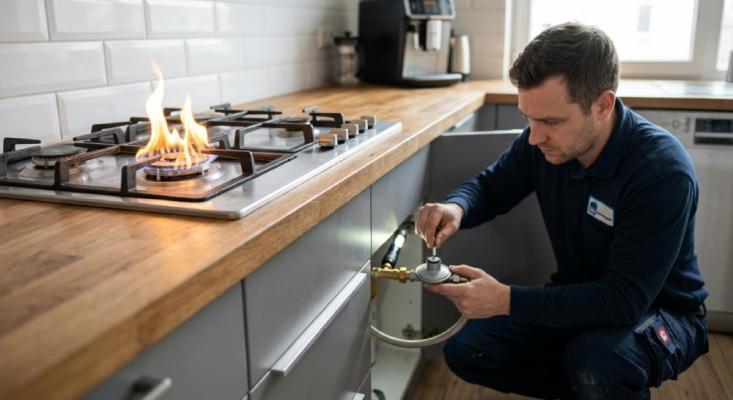
I’ve spent the last ten years working with gas hobs, cooktops, and conversion kits across Europe, the Middle East, Southeast Asia, and North America. One phone call I still remember clearly came from a distributor in the UK:
“We swapped the regulator on the LPG models to natural gas, but the flames are yellow and the burners keep cutting out. What’s wrong?”
That single change is one of the most common — and most dangerous — misconceptions I see. Many people treat the gas regulator as the entire conversion. It isn’t.
LPG to NG conversion is a system-level adjustment, not a single-part swap. If you only change the regulator, you risk incomplete combustion, soot buildup, inefficient cooking, and in the worst cases, serious safety issues. This is why many LPG to NG conversion attempts fail — even when the regulator has been replaced.
Let’s break down why this happens, what actually needs to change, and how to verify that the conversion is done correctly.
What Is LPG to NG Conversion?
LPG to NG conversion means modifying a gas appliance so it can safely operate on natural gas instead of liquefied petroleum gas.
It requires coordinated adjustments in pressure, gas flow, and combustion settings.
Why Changing the Gas Regulator Alone Does Not Complete LPG to NG Conversion?
The gas regulator has a simple role: it reduces incoming pressure and maintains a stable outlet pressure that the appliance expects. That’s all it does.
It does not control:
- Gas volume
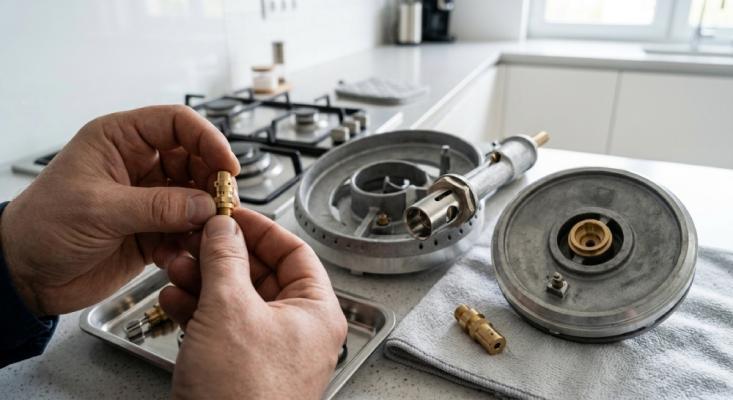
- Injector (orifice) size
- Air–gas mixing at the burner
In a gas hob, proper combustion depends on three coordinated elements:
When converting from LPG to natural gas, all three must be matched.
If you only change the regulator, the injector remains sized for denser, higher-energy LPG. The result is almost always a yellow, sooty, or unstable flame.
In real-world export projects, most conversion problems start exactly this way.
In short:
- The regulator controls pressure
- The injector controls gas flow
- The burner controls combustion
This is why changing the regulator alone can never complete a proper LPG to NG conversion.
Common Misconception
Many users assume that replacing the gas regulator is enough for LPG to NG conversion.
In reality, it only changes pressure — not gas flow or combustion performance.
What Does a Gas Pressure Regulator Actually Do?
A gas pressure regulator reduces inlet pressure and delivers a stable outlet pressure.
Typical working pressures:
- LPG (propane/butane): 28–30 mbar or 37 mbar
- Natural gas: 20 mbar (Europe), 4–7 in. W.C. (≈10–17.5 mbar) in North America
The regulator must match both the gas type and the required outlet pressure.
- An LPG regulator on natural gas → pressure too high
- An NG regulator on LPG → insufficient flow or failure to operate
Units also matter. Always confirm whether specifications are in:
- mbar
- kPa
- inches water column
This is especially critical for importers supplying multiple markets, where mismatched regulators are a common issue.
Gas standards vary by country, so LPG to NG conversion must always align with local regulations.
Typical LPG vs NG Pressure Reference
Values may vary depending on national standards and appliance design.
| Region | LPG Pressure | Natural Gas Pressure |
|---|---|---|
| Europe | 28–30 / 37 mbar | 20 mbar |
| North America | — | 4–7 in. W.C. |
| Middle East | 28–30 mbar | 18–20 mbar |
Gas pressure standards, injector sizing, and certification requirements differ significantly across regions. This is why LPG to NG conversion must always match the destination market.
For example, CHEFF gas hobs are supplied with clearly marked regulators and pressure data sheets, helping importers align with different regional requirements.
Why LPG and NG Require Different Settings?
LPG and natural gas are not interchangeable fuels. Their differences directly affect how a burner operates:
| Property | LPG (Propane/Butane) | Natural Gas (Methane) |
|---|---|---|
| Typical supply pressure | 28–37 mbar | 20 mbar / 4–7 in. W.C. |
| Relative density | Higher | Lower |
| Energy content | Higher per volume | Lower per volume |
| Injector orifice size | Smaller | Larger |
| Air requirement | Different ratio | Different ratio |
Because natural gas has lower energy density and lower pressure, it requires a larger injector to deliver sufficient gas volume.
At the same time, the air shutter must be adjusted to maintain a stable, blue flame.
Ignoring these differences is exactly why “I only changed the regulator” almost always fails.
What Components Are Required for a Complete LPG to NG Conversion?
This is why LPG to NG conversion is typically provided as a complete conversion kit, not separate parts.
A proper conversion includes:
Gas Regulator
Adjusted or replaced to match natural gas pressure.
Injector / Orifice
LPG uses smaller injectors; natural gas requires larger ones. This is the most critical change for correct gas flow.
Burner Air Adjustment
Fine-tuning the air–gas ratio to achieve a stable blue flame.
Conversion Label / Rating Plate
Updated to reflect the new gas type, pressure, and injector size.
When all four elements are handled correctly, the appliance performs as if it were originally designed for natural gas.
LPG to NG Conversion: Professional Checklist
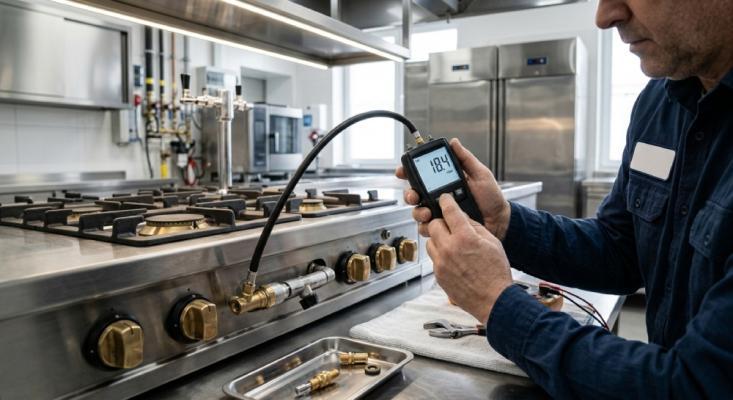
This checklist is for coordination with qualified technicians — not a substitute for manufacturer instructions.
- Confirm the appliance supports LPG to NG conversion
- Adjust or replace the regulator
- Install correct injectors
- Adjust burner air settings
- Test pressure with a manometer
- Perform leak testing
- Verify flame condition
Common Problems After Incorrect Gas Conversion
The most common issue is a yellow flame, which is a clear warning sign that combustion is incorrect.
| Problem | Likely Cause |
|---|---|
| Yellow or sooty flame | Incorrect air–gas ratio or injector |
| Flame lifting | Pressure too high or injector oversized |
| Weak flame | Low pressure or undersized injector |
| Ignition issues | Incorrect air settings or mismatch |
| Gas smell | Incomplete combustion or leakage |
Most LPG to NG conversion problems are caused by incomplete or mismatched modifications, not product defects.
How to Verify a Safe LPG to NG Conversion?
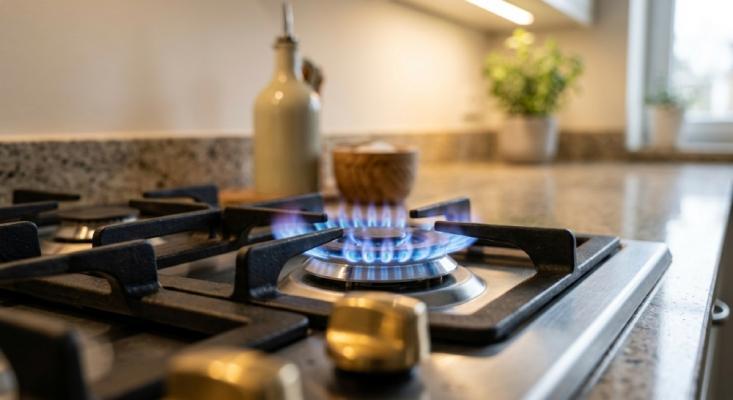
Never skip verification. It only takes a few minutes but prevents serious issues:
- Leak test with soapy water
- Check pressure using a manometer
- Confirm stable blue flame
- Verify conversion label and injector data
If any step fails, stop and correct the issue before use.
Can Every Gas Hob Be Converted from LPG to NG?
No. Not all models support conversion.
Always confirm:
- Manufacturer approval
- Availability of a certified conversion kit
- Compliance with local certification requirements
CHEFF designs many models for dual-market use, making conversion straightforward when done correctly.
What Importers Should Confirm Before Ordering Gas Hobs?
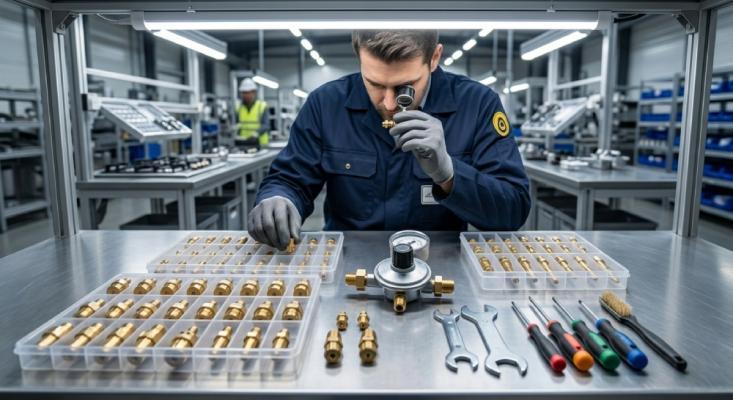
For importers and distributors, these checks directly affect installation success and after-sales costs:
- LPG, NG, or dual-fuel configuration
- Standard pressure and injector specifications
- Availability of certified conversion kits
- Supported certifications (CE, AGA, etc.)
- Technical documentation in English
Addressing these points before shipment prevents delays, complaints, and costly rework.
FAQ
Can an LPG gas stove be converted to natural gas?
Yes, if the manufacturer provides a compatible conversion kit and the model supports it.
What parts are included in a conversion kit?
Typically injectors, regulator or regulator components, air adjustment guidance, labels, and instructions.
Why is my flame yellow after conversion?
Usually due to incorrect injector size or improper air–gas ratio.
Should distributors stock LPG and NG separately?
Using one base model with certified conversion kits is often more flexible, depending on regulations.
Is LPG to NG conversion safe everywhere?
No. Safety depends on local regulations, certification standards, and product approval.
Conclusion
For distributors and importers, LPG to NG conversion is more than a technical adjustment — it directly affects performance, compliance, and after-sales risk.
Choosing a supplier that provides complete conversion data, matched components, and clear documentation helps reduce issues and ensures consistent results across different markets. For more information, visit our product catalog or contact us.