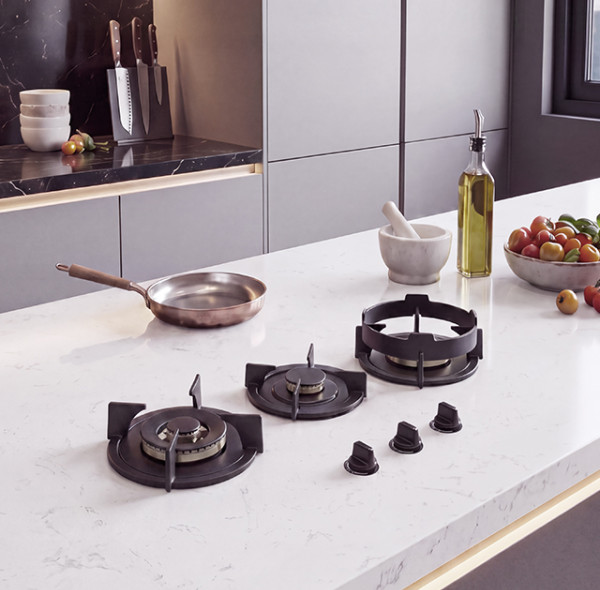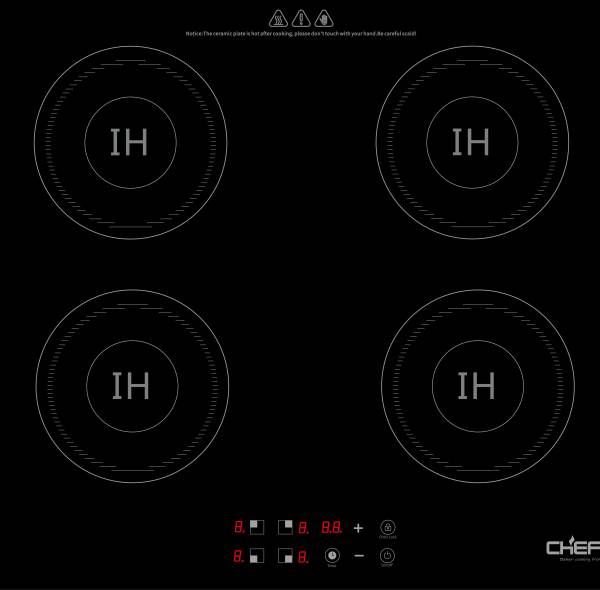
How to Install a Built-in Gas Hob on Quartz Countertops: A Complete Guide
Installing a built-in gas hob on quartz countertops is about much more than just dropping the appliance into a hole. A truly safe and long-lasting result comes down to selecting a compatible model, getting the dimensions right, preparing the countertop carefully, and strictly following local gas safety regulations.
I work with kitchen appliance manufacturing and international projects, helping distributors, contractors, and project partners select suitable gas hob solutions. I have seen more quartz countertop hob installations go wrong than go right on the first try.
Most people figure it is just cut a hole, drop the hob in, hook up the gas. On a granite countertop, sure, maybe you get away with that. Quartz? No. Quartz is engineered: quartz particles bound with resin. It is tough, but one wrong move with the cutting tool and you have got a crack or a chipped corner on a countertop that cost you a few grand. Add to that the fact that different hob models, even ones labeled the same width, can have cut-out dimensions that differ by a centimetre or two. Many installation problems happen because the countertop is fabricated before the correct hob model is confirmed.
Here is what I have learned the hard way. Whether you are a contractor, a distributor, or doing your own kitchen, this will save you some grief.
Table of Contents

Can You Even Put a Gas Hob on Quartz?
Yes. It is fine.
Quartz has become increasingly popular because it is tough, does not stain, cleans up easy, and looks sharp. But it is not granite. Cutting it needs diamond tools and someone who knows what they are doing. One slip and the countertop may require repair or replacement.
Granite, marble, and solid surface all work too. Same process, more or less.
Before You Buy the Hob
For distributors and project buyers, requesting technical drawings before shipment can help local installers prepare the countertop correctly and reduce installation delays.
Do not even think about the countertop yet. Sort the hob first, or you will be patching holes later.
- Look at the installation drawing, not the product spec sheet. The spec sheet says "60 cm" — that is the overall width of the hob. The hole you need in the countertop is almost never 60 cm. Find the installation diagram, confirm the cut-out dimensions, and provide these specifications to your countertop fabricator before cutting.
- Check certification. In Europe, you need CE and GAR compliance. Other regions have their own requirements. Sort this out before shipping. Finding out at the job site that your hob is not certified for the local market is a mess you do not want.
- Do not get the gas type wrong. LPG or natural gas. Decide before you order. Swapping injectors and reconfiguring later costs time and money, and sometimes it does not work properly at all.
- Think about how the hob will actually get used. Four burners sounds great until you realize two would have done the job. Or the opposite: you underspec a restaurant kitchen and now everyone is waiting on the stove. Residential, commercial, apartment — different burner counts, different power outputs. Match it to the real workload.
What to Check Before Installation
1. Hob Dimensions vs. Cut-Out Dimensions
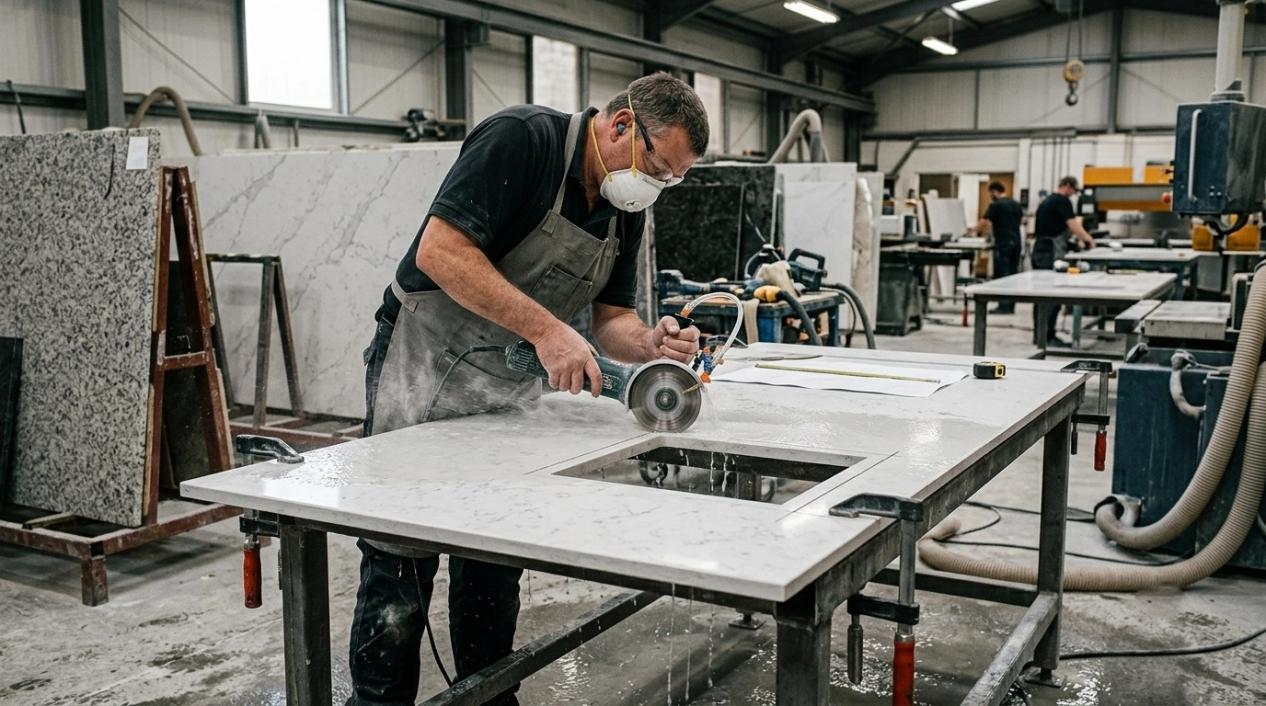
I am saying it again because it is the number-one mistake. Two hobs, both labeled "60 cm wide" — completely different holes. Give the installation drawing to your stone fabricator. Do not estimate, do not approximate, do not eyeball it.
If you are replacing an old hob, measure the existing cut-out first, then compare it against the new model's drawing. If they do not match, you have got a problem.
2. Countertop Thickness
The thickness of your quartz slab has to work with the hob's fixing system. Thicker quartz helps, but the hob's own structural design matters just as much. For premium projects, selecting a hob with reliable materials and construction quality is important.
3. Cabinet Clearance and Ventilation
This is a gas flame we are talking about, not induction. It puts out real heat. The space underneath has to breathe: heat needs somewhere to go, gas pipes need room to run, air needs to flow. Different burner layouts call for different clearances. Read the manufacturer's spec.
4. Double-Check the Gas Type
Is the unit set up from the factory for your gas supply? If not, you will get weak flames, bad combustion, or worse.
Tools and Materials
Here is what you will need to get the job done right.
Tools
- Tape measure
- Pencil or marker
- Spirit level
- Screwdriver set
- Adjustable wrench
- Diamond cutting tools rated for quartz
Materials
- The hob itself
- Sealing strip or sealant (use whatever the manufacturer recommends)
- Approved gas connectors and fittings
- Gas regulator (if your setup needs one)
- Fixing brackets or clamps
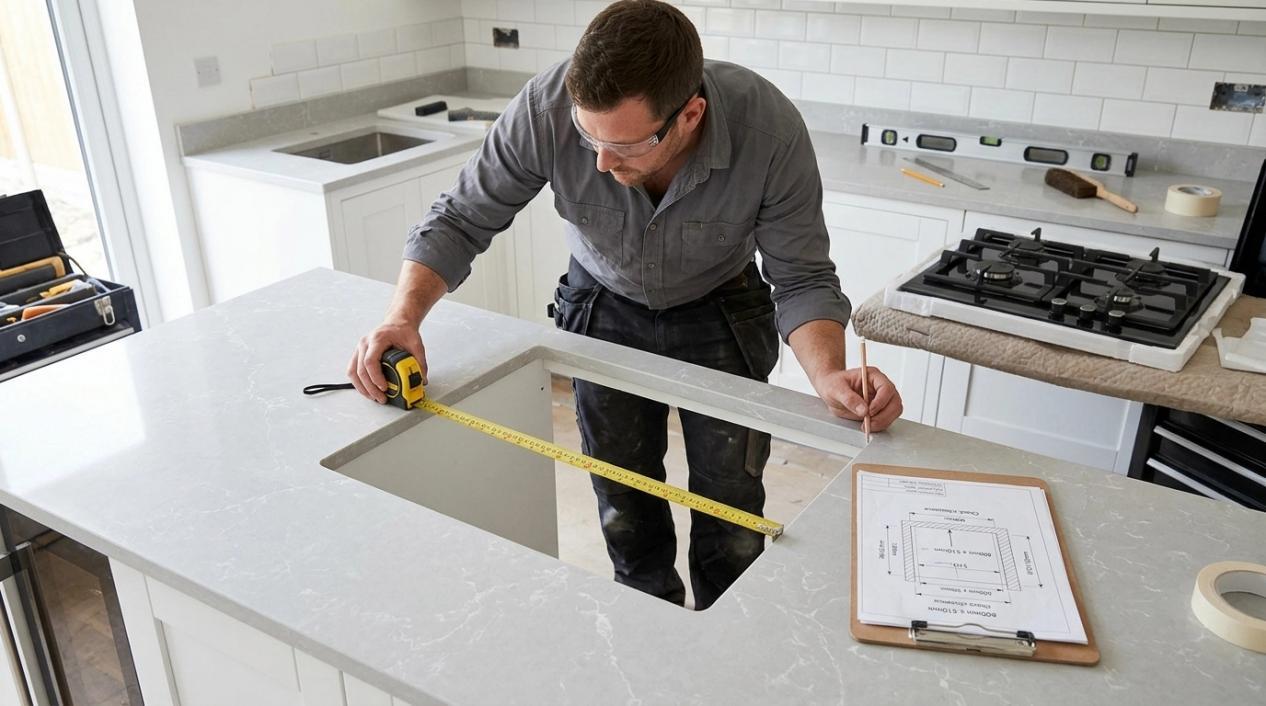
Let a stone fabricator do the cutting. Someone with the right diamond blade and the right machine. Quartz does not forgive.
Installation, Step by Step
Mark the Cut-Out
Follow the drawing. Leave the clearances the manufacturer asks for on all sides.
Cut the Opening
Hand this to a pro. Good equipment gives you a clean edge. Bad equipment vibrates, stresses the stone, and suddenly you have got a crack across a thousand-dollar slab. There is no patching quartz.
Clean Up the Cut-Out
Dust, debris, rough spots — get rid of all of it. Smooth the edges, double-check the dimensions, make sure the hob sits flush.
Apply the Seal
Use the sealing strip that came with the hob, or the sealant the manufacturer recommends. Keeps water out, keeps the hob from shifting, and looks clean.
Lower the Hob into Place
Easy. Do not force it. Run a level across all four sides.
Connect the Gas
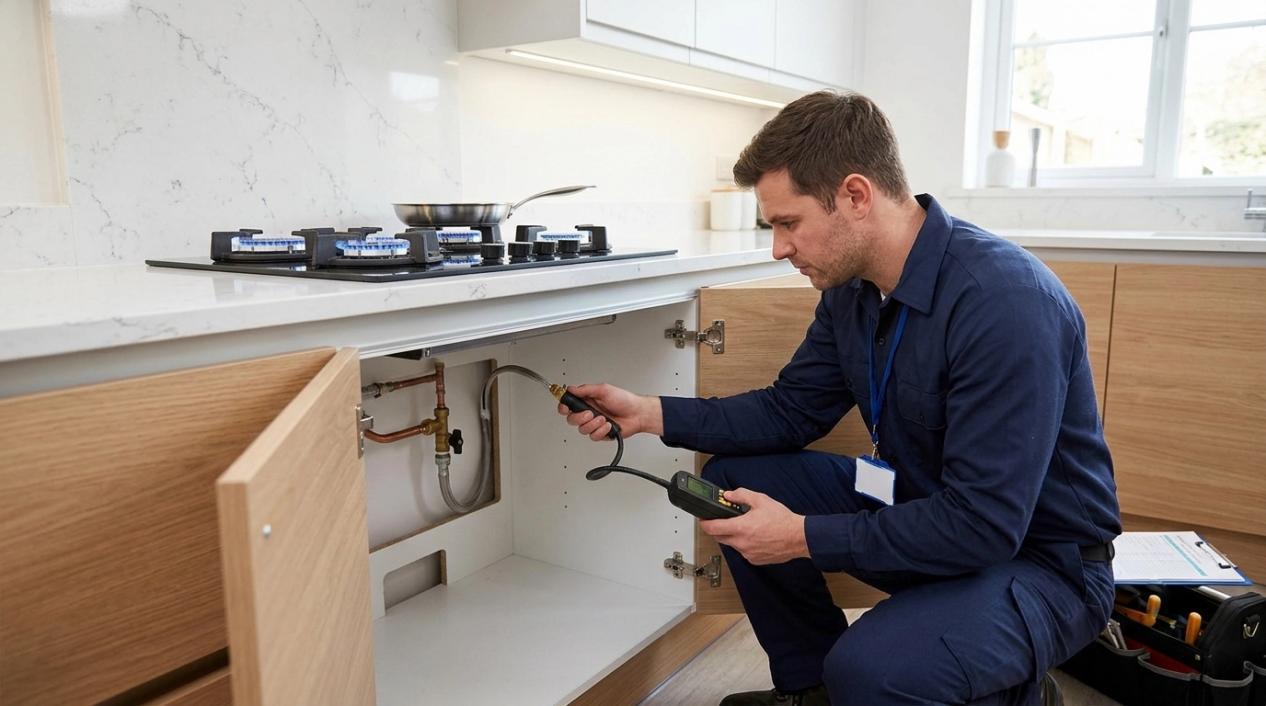
Approved fittings only. Perform leak testing according to local regulations and approved installation procedures. In most places, gas connections legally need a licensed professional. Skipping professional gas installation may create safety risks and compliance issues.
Test the Burners
Ignition. Flame stability. Colour — mostly blue, not yellow. Safety features: does the flame failure device actually cut off the gas? Test everything.
Final Walk-Through
Level, seals, clearances, overall look. If something is off, now is the time.
Mistakes I See All the Time
- Wrong cut-out size. Gaps look terrible. Or the hob does not fit. Or you cannot replace it later without redoing the countertop.
- Cutting quartz with the wrong tools. Cracks and chips, almost guaranteed.
- No ventilation space. Heat builds up, cooks the hob internals and the cabinet.
- Wrong gas type. Bad flame, lousy performance, and a safety risk.
- Buying the hob without reading the installation requirements first. Then it shows up and does not fit the space you have got.
- Fabricating the countertop before you have locked in the hob model. This one hurts the most because it is expensive, it is permanent, and it is completely avoidable. Cut-out dimensions are model-specific. Pick the hob first.
Advice for Contractors and Distributors
- Get the cut-out drawing to the fabricator before they touch the stone. The money and time you save on rework alone pays for this habit.
- Keep all the installation paperwork. Six months later, when there is a warranty claim or a service call, you will be glad.
- Work with suppliers who actually support you technically. Drawings, custom configurations, installation guidance, responsive after-sales — if any of these are missing, you will feel it on the next project.
- Stick to standard-sized models where you can. Clean dimensions, clear specs. When the hob eventually needs replacing, you will not be hunting for a unicorn.
We have been manufacturing for years: OEM and ODM hobs for distributors and project buyers worldwide. Custom burner setups, full installation documentation, solid safety engineering. If you are sourcing, get in touch.
FAQ
Can quartz crack during installation?
With the wrong tools or a sloppy cut, absolutely. Use an experienced fabricator, follow the cut-out dimensions exactly, and you will be fine.
What is the difference between hob size and cut-out size?
Hob size is the appliance's external footprint. Cut-out size is the actual hole you need in the countertop. Always go by the installation drawing. Never guess.
Does a gas hob under quartz need ventilation?
Yes. Heat has to go somewhere, and gas pipes need room. Stick to the clearance numbers in the manufacturer's spec.
Can I swap in a new hob without replacing the quartz?
If the new hob's cut-out matches the old one, the replacement should be straightforward. Measure what you have got, compare it to the new drawing, and only order if they line up.
What should I tell the supplier when ordering?
Countertop material and thickness, required cut-out size, gas type, number of burners, target market, any certification requirements. The more you give them, the less likely you will end up with the wrong product.
The Supplier Matters as Much as the Hob
The hardware is one thing. Drawings, customisation capability, and after-sales support are what actually keep a project on the rails. At CHEFF, we do OEM and ODM built-in gas hobs — burner configurations matched to your market, proper installation docs, reliable safety systems, and manufacturing quality that holds up.
Everything above comes from actual projects, actual problems, and actual fixes. Gas connections need to follow your local codes, and in most places that means a licensed professional. Skipping professional gas installation may create safety risks and compliance issues. For specific project requirements or sourcing inquiries, contact CHEFF to discuss your project.