Sourcing Kitchen Appliances for the Middle East: LPG vs NG, Certifications and Climate-Driven Design
Quick Answer
Sourcing gas cooking appliances for the Middle East comes down to three specifications that a catalogue cannot answer for you. First, the gas: LPG from cylinders still dominates Gulf households while natural gas serves newer city networks, and a hob is built for one of them at the factory, because LPG and NG need different injectors and air settings — changing the regulator alone is not a conversion. Second, conformity: GCC states work to GSO standards and the G-Mark, Saudi Arabia routes through SABER for SASO product and shipment certificates, and the UAE applies ECAS/ESMA requirements, so the approval path must be confirmed for each destination rather than assumed. Third, climate: 45-50 °C summers, wind-blown dust and coastal humidity change what fails in service, which is why ignition system choice, stainless steel grade, burner cap material and panel finish deserve more attention than they get in a standard quotation.
The Middle East Is Not One Market
The single most common sourcing mistake we see is treating the region as one destination. The Gulf Cooperation Council states, the Levant and North Africa differ in gas supply, electricity quality, conformity route, price tier and how the appliance is actually used — and those differences decide the specification before price is even discussed.
A distributor in the UAE may be supplying high-rise apartments on piped natural gas alongside villas on LPG cylinders. An importer in Saudi Arabia is dealing with a conformity platform that has been mandatory for years and with a market that spans premium retail and large project tenders. A trader serving Iraq, Jordan or North Africa may be working with weaker grid stability, thinner service networks and a stronger emphasis on repairability and price. A specification copied from one country to another usually produces either an over-priced product that does not sell or an under-specified one that generates returns.
We have shipped appliances into Gulf distribution and project channels, including the UAE, and the pattern is consistent: the buyers who get good results are the ones who specify gas type, conformity route and climate factors up front, then choose the factory. Buyers who shop on unit price alone come back with service problems in the second summer.
LPG vs NG: What Actually Changes in the Product
Liquefied petroleum gas and natural gas are not interchangeable at the burner. They differ in calorific value, density and the pressure at which they are delivered, and those differences change the injector orifice size, the air mixture setting and, in some designs, the burner itself. A hob built and set for LPG will not perform correctly on NG, and the reverse is equally true.
In the Gulf, LPG is typically supplied in cylinders, often a butane-propane mix that varies by supplier and season, while natural gas arrives through piped city networks in newer developments. That means the same importer may need two versions of the same model in the warehouse, clearly labelled, with conversion kits and injectors available as service parts so a technician can adapt a product on site when a building switches supply.
One point causes more field failures than any other, so it is worth stating plainly: replacing the regulator does not convert an appliance from LPG to NG. The injectors must be changed and the air adjustment set correctly, and the installation should be leak-tested afterwards. We have written a separate technical note on why changing the gas regulator alone is not enough for an LPG to NG conversion, and it is worth passing to your installers.
Manufacturer’s note: Send us the cylinder pressure, the gas composition if it is known, and the altitude of the main sales region. In hot coastal markets a butane-rich mix behaves differently from a propane-rich one, and the injector specification should follow the gas, not the label on the bottle.
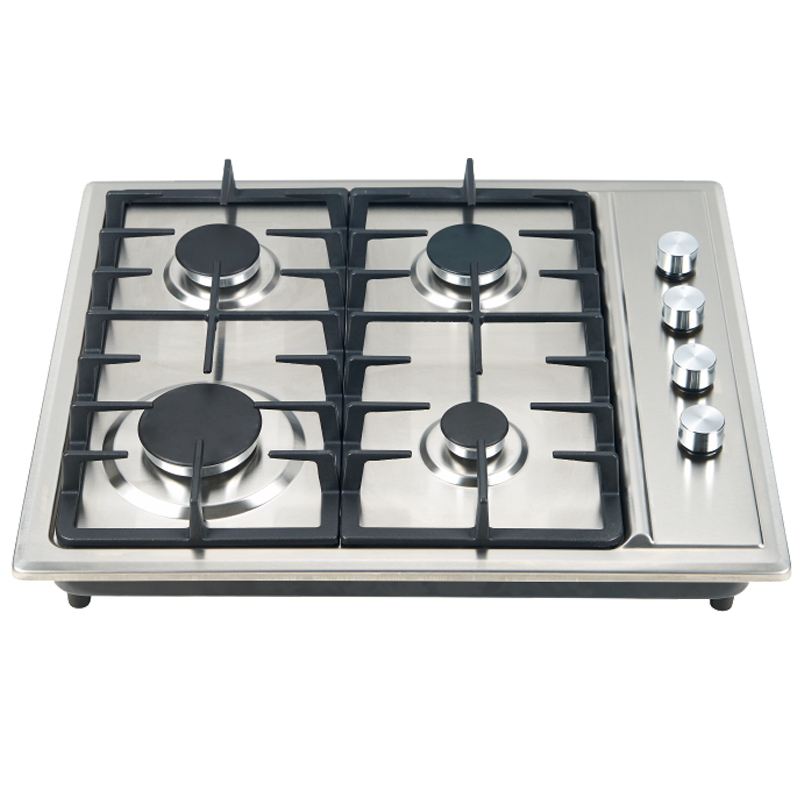
Built-in Range
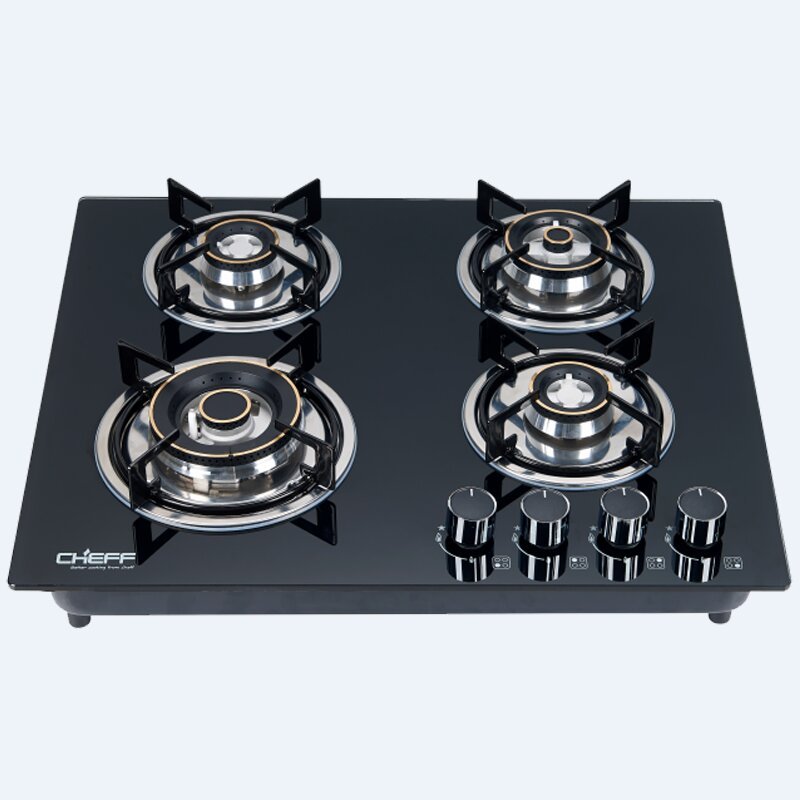
Four-Burner Tempered Glass Built-in Gas Hob — LPG / NG, OEM / ODM
Tempered glass panel, cast iron pan supports and safety device options, configured at the factory for LPG or NG. Panel size, burner layout, ignition type, gas setting and branding can all be specified for your market.
Certifications and the Conformity Route for Gulf Markets
Conformity is the part of a Gulf programme that most often delays a first shipment, because it is country-specific and document-driven. The framework is broadly consistent across the GCC, but each member state applies it through its own authority and platform.
| Destination | Typical route for gas cooking appliances |
|---|---|
| GCC states (general) | Gulf standards issued by GSO, with the G-Mark (Gulf Conformity Mark) applied to regulated products; national authorities may add their own registration. |
| Saudi Arabia | SABER platform registration, producing a Product Certificate of Conformity and a Shipment Certificate of Conformity referencing SASO standards. |
| United Arab Emirates | Emirates Conformity Assessment Scheme (ECAS) for regulated products under the national standards authority, alongside G-Mark where applicable. |
| Kuwait, Qatar, Oman, Bahrain | National conformity schemes layered on GSO standards; documentation expectations vary by authority and by product scope. |
| Levant and North Africa | Separate national schemes and standards; gas safety requirements can differ more sharply than electrical ones. |
Two practical rules follow. First, decide the destination before tooling, because the certificate follows the model and the market, not the container. Second, ask for the evidence in writing: the test report, the certificate number and the issuing body. For comparison, the European route we document in our guide to CE, UKCA and GAR for European gas appliances is a different framework altogether, and a CE file will not satisfy a Gulf authority.
Climate-Driven Design: Heat, Dust and Coastal Humidity
Ambient conditions in the Gulf are not a marketing detail; they change which components fail. We see three pressures in service data and dealer feedback: sustained high temperature, airborne dust, and salt-laden humidity on the coast.
Heat. A kitchen in a Gulf summer can sit above 40 °C for weeks. For gas hobs the immediate effect is on ignition: battery ignition units work harder and their cells age faster in high ambient temperature, which is one reason piezo or mains-linked ignition is often preferred for project and hospitality specifications. Safety devices such as flame failure thermocouples need to be specified for reliable performance at elevated ambient temperature. On electric products the effect is broader, because electronics must be thermally derated — an induction board designed for a 25 °C kitchen behaves differently in a 45 °C one, and under-counter ventilation becomes a design requirement rather than a nicety.
Dust. Wind-blown sand reaches kitchens even in sealed buildings. Exposed ignition electrodes, burner caps and valve spindles collect fine grit, and a burner that is not designed for easy cleaning will drift out of adjustment. Removable brass or cast-iron caps and simple electrode access make a measurable difference to the number of service calls in the first year.
Humidity and salt. Coastal installations punish low-grade materials. Stainless steel grade matters — 201 non-magnetic stainless is an economic choice for inland value products, while 304 is the sensible specification for coastal and humid projects. Enamel finishes resist rust and yellowing on panels, brass burner caps resist corrosion better than aluminium, and glass panels need properly sealed edges to keep moisture out of the assembly.
None of these choices is exotic, and none of them is expensive at the factory. They simply have to be specified. A quotation that does not ask where the product will be installed cannot answer them.
Voltage, Frequency and Supply Stability
Most Gulf markets run on 220-240 V at 50 Hz, which aligns with the standard export specification for our gas hobs and built-in electric products. Three qualifications matter for a programme rather than a single order.
First, confirm the plug and cord specification for the destination, because retail and contract buyers in the same country sometimes expect different arrangements. Second, where electric cooking appliances are in scope, check the stability of the supply: resistive products tolerate voltage variation more gracefully than electronics-heavy induction, which is a factor in older buildings and in markets outside the GCC core. Third, for appliances using ignition or controls with electronics, specify protection against voltage transients, since switching on a weak local network is a common cause of premature control failure.
For gas hobs the electrical load is small, so the practical risks are the ignition system and the marking on the rating label. Both should be verified against the destination before production, not after arrival.
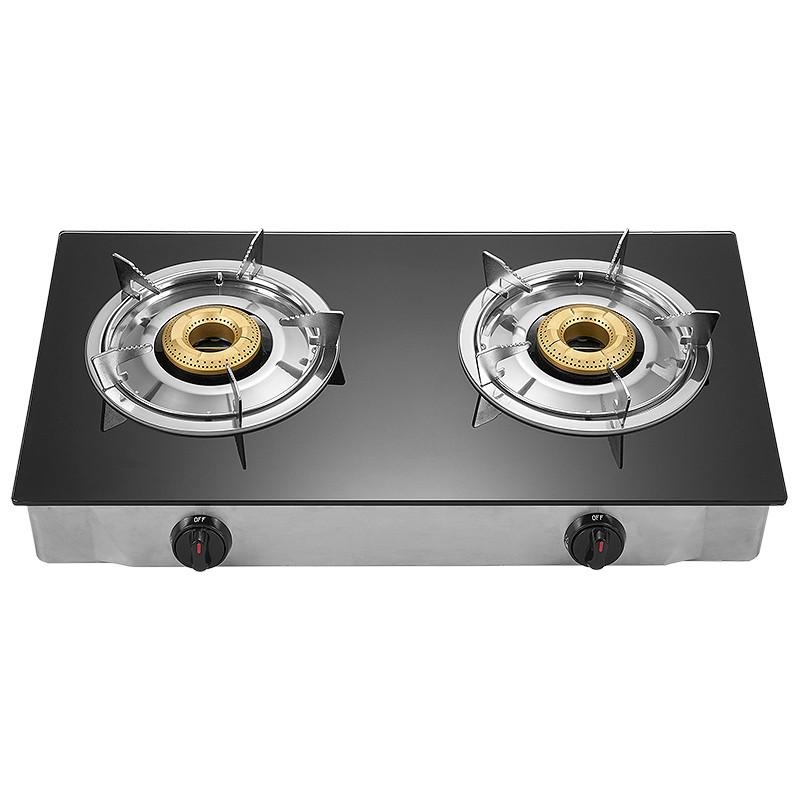
Table-Top Range
Two-Burner Glass Table-Top Gas Cooker — LPG / NG, Brass Burner Cap
The format many Gulf households use as a second or backup cooker: compact, easy to move, brass caps for corrosion resistance and simple service. OEM branding and retail packing available.
Choosing the Right Product Mix for a Gulf Importer
A Gulf catalogue rarely works with a single hero product. The households, projects and channels in the region are too varied, so a practical range usually spans three or four formats with clear price tiers.
| Format | Why it belongs in a Gulf range |
|---|---|
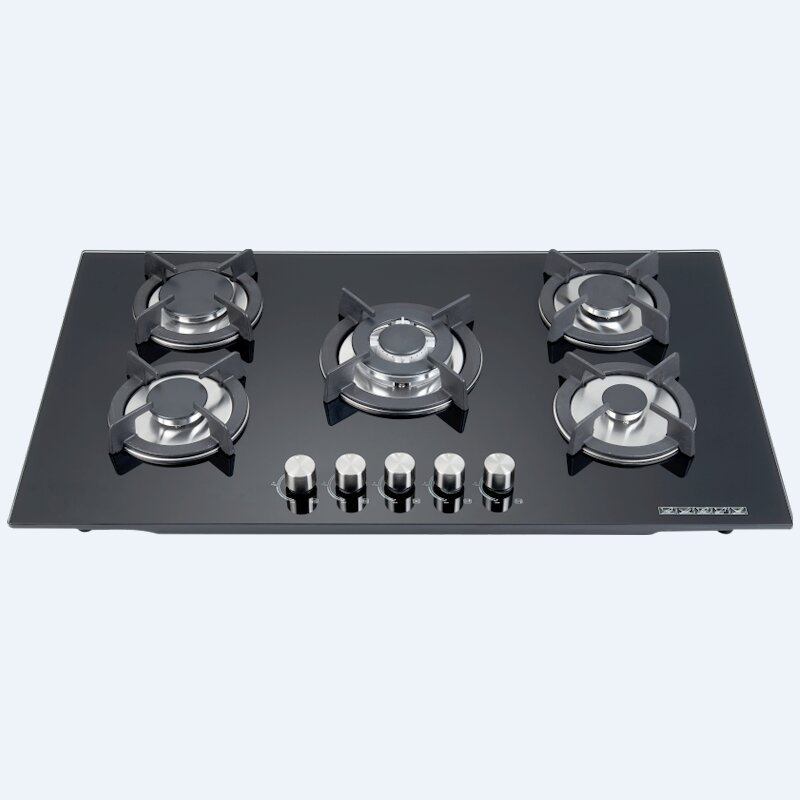
| Built-in gas hob, 4-5 burner | The default for apartments, villas and hotels; specify glass or stainless panel, LPG or NG, and safety device options. |
| Table-top gas cooker | Compact second cooker and a natural entry product for price-sensitive buyers and rental accommodation. |
| Portable butane stove | Outdoor cooking, camping and catering backup; strong seasonal sales and low unit cost. |
| Commercial gas cooker | Supplies restaurants, hotels and central kitchens; heavier duty cycle and different conformity expectations. |
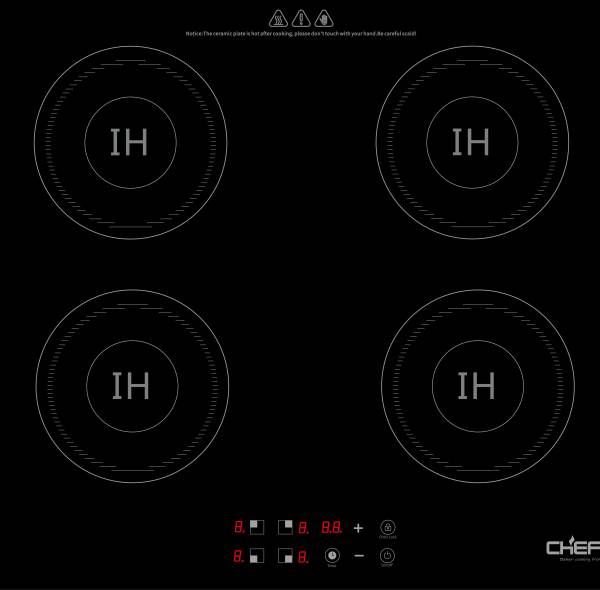
| Built-in electric / induction | Premium residential and project tier where piped gas is unavailable or where flame-free cooking is preferred. |
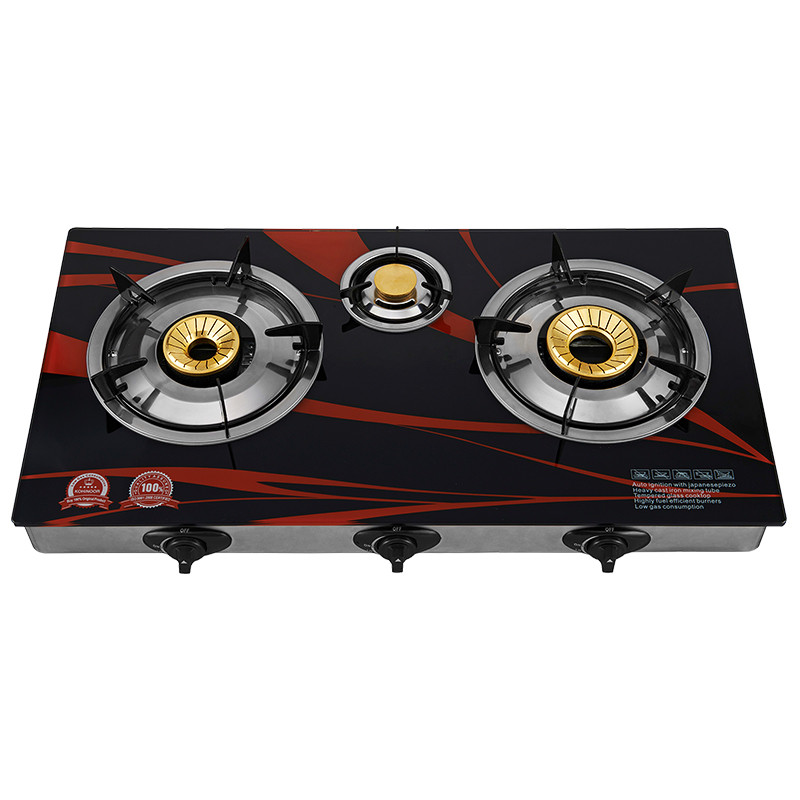
The mix also depends on how the product reaches the customer. Retail chains want branded packaging and a clear warranty story; project buyers want compliance files, consistent cut-out dimensions and spare parts; traders want price tiers and fast availability. Where a single factory can supply several of these formats on one set of standards, the importer’s compliance burden drops sharply — one certificate family instead of four.

Packaging, Documentation and Spare Parts
Three items in this section cause more delay and cost than any component failure, and all three are settled before production rather than after.
Packaging for heat and humidity. Sea freight through the Gulf involves high container temperatures and humidity swings. Cartons, adhesives, labels and protective films should be selected for those conditions, and desiccant or moisture protection should be included where the product has a glass panel or a printed finish.
Documentation in the right language. Arabic user manuals, labels and safety warnings are expected in much of the region, and a country-specific rating label must carry the correct gas type, pressure and voltage. Getting this wrong is a customs and retail problem, not a factory one.
Spare parts as part of the order. Burner caps, injectors for both gas types, ignition units, thermocouples and knobs should be quoted as a service kit alongside the appliances. In markets where a technician may be hours away, a stocked kit is what converts a complaint into a repair. Our experience with Gulf distribution projects, including the UAE, is that the importers who order service kits with the first container have materially fewer returns than those who order them after the first failure.
Sourcing Checklist Before You Place an Order
This is the list we work through with a Middle East buyer before quoting. Every item changes either the product, the price or the shipping schedule.
| Item | Why it matters |
|---|---|
| Destination country and conformity route | Determines G-Mark, SABER/SASO, ECAS or another national scheme, and therefore the test evidence required. |
| Gas type, pressure and composition | Sets injector sizing and air adjustment; LPG and NG versions cannot be swapped by changing a regulator. |
| Ignition system | Battery, piezo or mains-linked; high ambient temperature shortens battery life and affects reliability. |
| Panel material and finish | Tempered glass, stainless steel 201 or 304, enamel or powder coating; coastal humidity decides the grade. |
| Burner cap material | Brass resists corrosion and holds flame stability better than aluminium in humid, salty air. |
| Safety devices | Flame failure device and thermocouple specification for projects and hospitality. |
| Label, manual and packing language | Arabic documentation and correct rating labels are expected in much of the region. |
| Service kit and spare parts | Caps, injectors for both gases, ignition units and thermocouples should ship with the order. |
| Packaging for heat and humidity | Cartons, adhesives and moisture protection must survive Gulf sea freight conditions. |
A factory that can answer all nine items in writing is a factory that has shipped to the region. A factory that answers only the first two is quoting a product, not a market entry.
Frequently Asked Questions
Q1. Should I order LPG or natural gas hobs for the Middle East?
It depends on the destination and the building. LPG in cylinders still serves most households, while piped natural gas is common in newer developments and city networks. Many importers stock both versions of a popular model with clearly labelled packaging, plus conversion kits and injectors for service use.
Q2. Can one hob model work on both LPG and NG?
Not without modification. The injectors must be changed and the air adjustment reset for the gas in use, and the appliance should be leak-tested afterwards. Replacing the regulator alone does not convert the appliance and is a common cause of poor flame performance and safety complaints.
Q3. What certification do gas hobs need for the Gulf?
GCC markets work to GSO standards with the G-Mark for regulated products. Saudi Arabia routes through the SABER platform for SASO product and shipment certificates, and the UAE applies ECAS requirements through its national standards authority. Other states layer their own schemes on the same base standards, so confirm the route for each destination before production.
Q4. How does the Gulf climate affect a gas hob?
High ambient temperature shortens battery ignition life and makes component selection more critical; dust affects electrodes, caps and valve spindles; and coastal humidity corrodes low-grade materials. Specifying piezo or mains-linked ignition, removable brass or cast-iron caps, and 304 stainless for coastal projects addresses most of the risk.
Q5. Glass panel or stainless steel for the Gulf market?
Both sell. Tempered glass is easier to clean and carries the premium look; stainless steel is harder wearing in rough service and, in the higher 304 grade, more tolerant of coastal humidity. Many ranges carry both so the retailer can offer two price tiers from one cut-out.
Q6. What spare parts should ship with the first container?
Burner caps, a set of LPG and NG injectors, ignition units, thermocouples and control knobs. In markets where technicians may be far from the point of sale, having the parts on hand is the difference between a repair and a return.
Q7. Does CHEFF supply OEM and ODM for Middle East brands?
Yes. Our export range covers built-in and table-top gas hobs, portable butane stoves, induction and infrared electric hobs and commercial cooking appliances, with OEM and ODM support for panel design, burner layout, ignition type, gas setting, logo, packing and Arabic documentation.
Conclusion: Specify for the Site, Not the Catalogue
Sourcing for the Middle East rewards preparation. The gas specification decides whether the appliance performs at all, the conformity route decides whether it clears customs, and the climate specification decides whether it is still working in the third summer. None of those three is visible in a unit price, and all three are cheaper to resolve at the factory than at the port or the jobsite.
CHEFF is a kitchen appliance manufacturer in Foshan Shunde, Guangdong, China. We build built-in and table-top gas hobs, portable butane stoves, induction and infrared ceramic hobs and commercial cooking appliances for export markets, with OEM and ODM support covering gas configuration, burner layout, panel and finish specification, ignition type, branding, Arabic documentation and service kits. Appliances are function- and safety-tested at our plant before shipment. If you are building a range for a Gulf market, send us the destination country, the gas type and pressure, and where the product will be installed; we will tell you honestly what the specification needs to be — and, just as usefully, when a lower-cost configuration will do.
Sourcing Cooking Appliances for a Gulf Market?
Tell CHEFF’s engineers the destination country, the gas type and pressure, and where the appliances will be installed. We reply with a specification and a conformity plan, not just a quotation.