What Is an Invisible Induction Hob and How Does It Work Under a Stone Countertop?
Quick Answer
An invisible induction hob is a built-in induction cooktop installed underneath a sintered stone or quartz countertop, so no burner, glass panel or control knob is visible on the surface. It heats ferromagnetic cookware through a 12-20 mm non-metallic stone slab using an electromagnetic coil below. Available in 1, 2, 4 and 6 cooking zones and 110 V / 220 V / 380 V versions, it suits villas, hotels and design-led kitchens that want a flat, seamless countertop — provided the stone is induction-safe, cookware is compatible, and the installer follows the required clearance, ventilation and electrical rules.
What Is an Invisible Induction Hob?
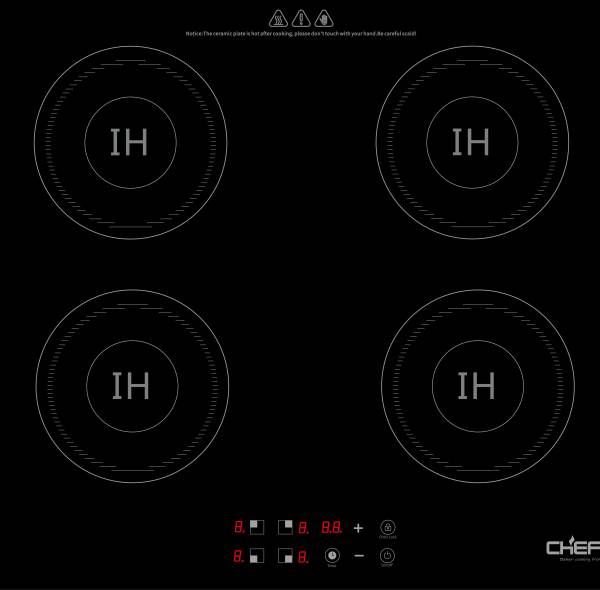
An invisible induction hob is sometimes called an under-countertop induction cooktop or a frameless induction hob. Unlike a conventional built-in induction hob, which has its own ceramic glass panel sitting flush in the worktop, an invisible induction module is mounted beneath the countertop slab. The slab itself becomes the cooking surface.
The result is a countertop with no visible cooking zones when the hob is off — just one continuous surface of sintered stone or quartz. When a pot is placed on the marked area and the touch control is activated, the hidden coil heats the cookware through the stone. When the design brief calls for an uninterrupted island, a seamless waterfall edge, or a surface that looks like furniture rather than an appliance, this is the product category a project team reaches for.
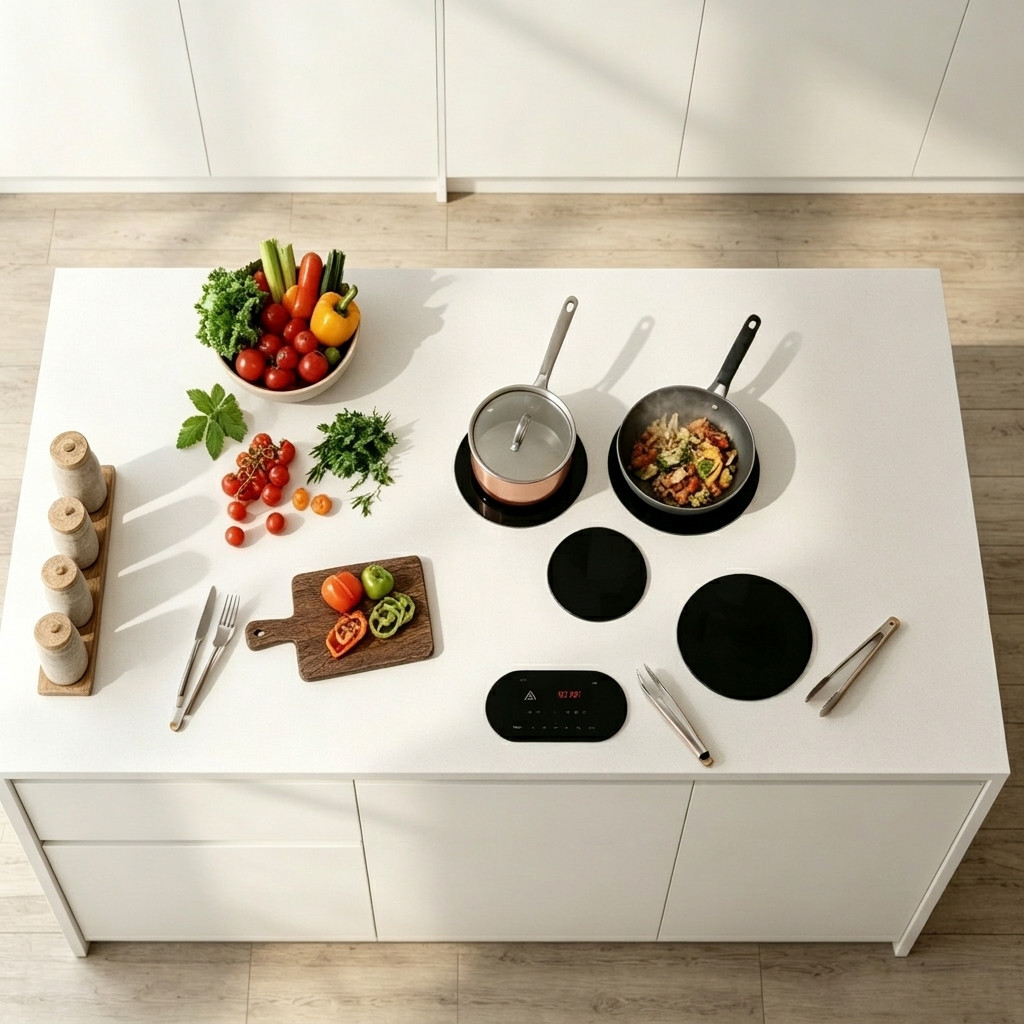
As a manufacturer, we at CHEFF produce this category in configurations of 1, 2, 4 and 6 zones, in 110 V, 220 V and 380 V, with touch controls and OEM/ODM customisation of panel size, power layout, control logic and branding. Before you compare price lists, however, it is worth understanding how the technology works — because most specification mistakes happen at the interface between the appliance and the stone.
How Does It Heat Through a Stone Countertop?
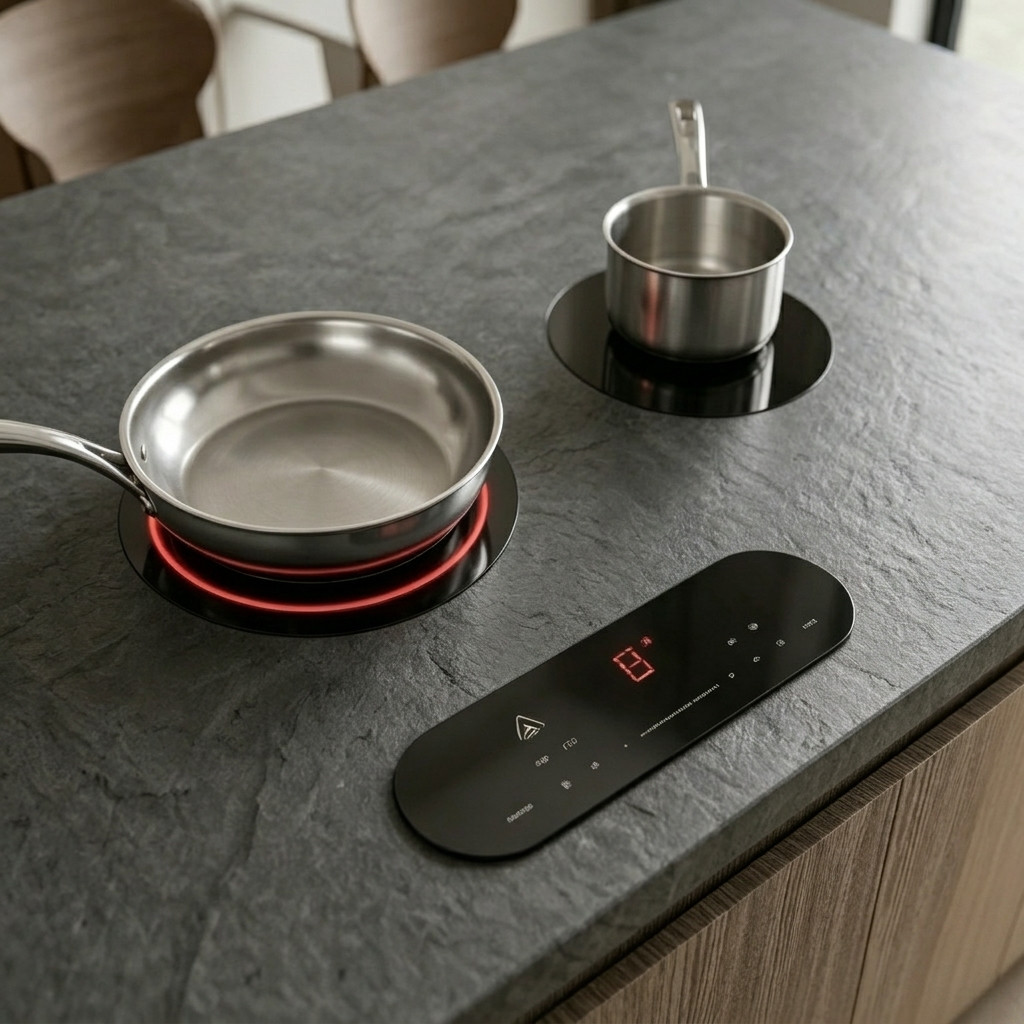
Induction cooking does not rely on radiant heat from a burner or a glowing element. The coil below generates an alternating electromagnetic field, which induces eddy currents in the ferromagnetic base of a compatible pan. Those currents generate heat inside the pan base itself. The stone slab in between is essentially transparent to the magnetic field, which is why a thin, non-metallic countertop can sit between the coil and the cookware without blocking the process.
Three practical consequences follow. First, the cookware must be induction-compatible: stainless steel or cast iron with a magnetic base works; pure aluminium, copper and most ceramic cookware does not. Second, the stone must not contain continuous conductive material in the cooking area — ordinary sintered stone and quartz slabs are fine, but metallic inclusions, metal mesh or conductive fillers can heat up unpredictably. Third, because the surface heats only where a pan is placed and mainly from the heat the pan radiates back, the stone stays cooler than with a flame — but the hidden electronics still need ventilation and service access underneath.
Manufacturer’s note: At CHEFF we always ask two questions before quoting an invisible induction project: what is the exact slab thickness and material, and where can the under-countertop module vent heat? Resolve these two before you finalise the kitchen drawing, not after the stone is cut.
Featured Product
Invisible Induction Hob — Built-in Under Sintered Stone & Quartz Countertops
Seamless under-countertop cooking for villa, hotel and design-led kitchens. 1 / 2 / 4 / 6 zones, touch control, 110 V / 220 V / 380 V, full OEM / ODM support.
Real Installation Requirements for Under-Countertop Induction
This is where an invisible induction hob differs most from a conventional hob, and where poorly prepared contractors cause the most problems. The appliance cannot simply be dropped into a cut-out in the middle of the slab; the whole countertop zone, the cabinet below and the electrical circuit are part of the installation.
| Installation Item | What Must Be Checked |
|---|---|
| Slab thickness | Typically 12-20 mm sintered stone or quartz; heating performance and zone detection depend on the specified range. |
| Material suitability | Non-metallic, non-conductive stone in the cooking area; confirm with the slab supplier before cutting. |
| Under-counter clearance | Enough air space below the module for cooling and airflow, plus access for future servicing. |
| Electrical supply | Dedicated circuit rated for the module power; match the 110 V / 220 V / 380 V version to the project site. |
| Control position | Touch controls are usually placed on the countertop edge or a small integrated panel; plan the wet area and gap sizes in the drawing. |
| Work sequence | The stone fabricator and the appliance installer must share the same drawing before templating — retrofitting an under-countertop unit afterwards is expensive. |
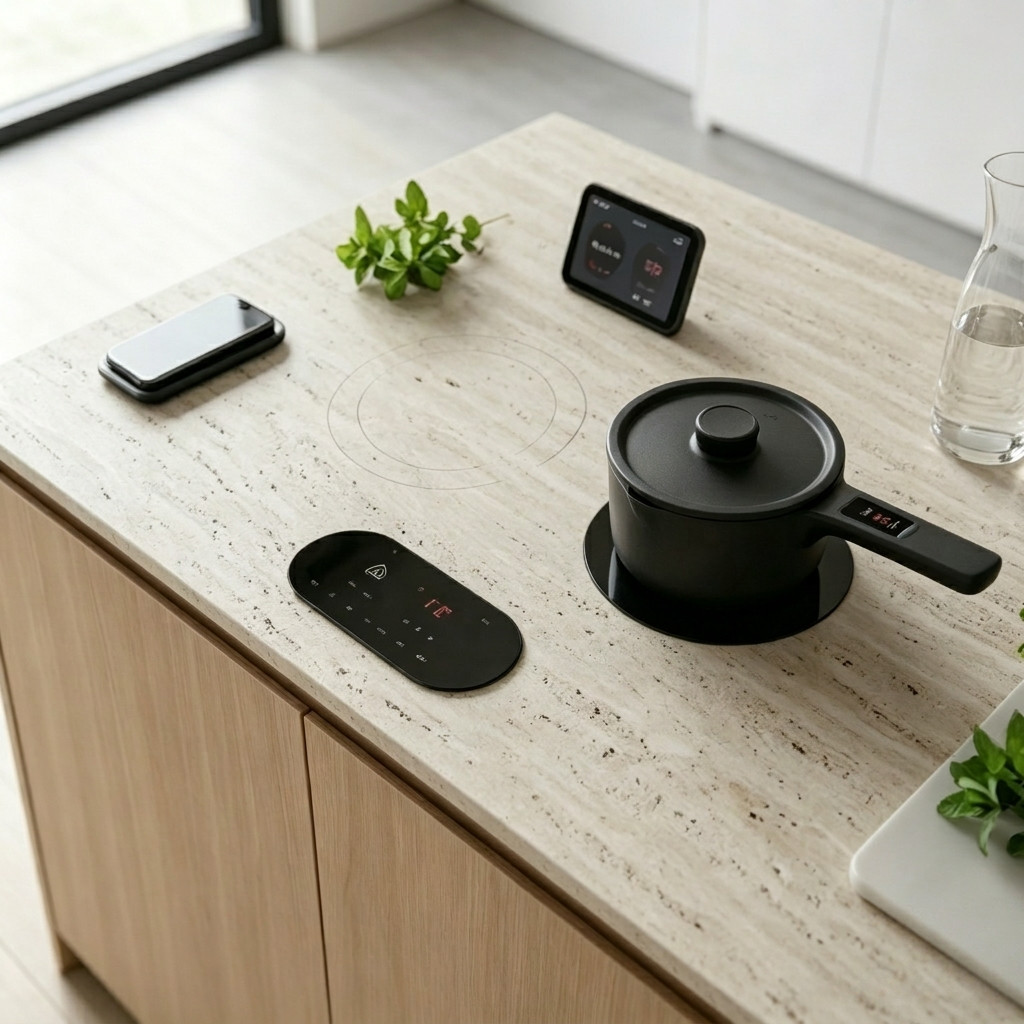
For importers and project buyers, the lesson is practical: when you order an invisible induction hob from a factory, ask the factory to supply the installation drawing and the material recommendation in writing, and pass both to the countertop fabricator before any stone is cut. Suppliers who only sell the unit without this documentation create avoidable risk at the jobsite.
1, 2, 4 or 6 Zones: Matching the Cooktop to the Kitchen
Invisible induction hobs are not one-size-fits-all. The zone count determines the module footprint, the power layout under the slab, and therefore the cabinet and electrical planning above it. Choosing the configuration is the first spec decision a buyer makes.
| Zone Count | Typical Fit | Considerations |
|---|---|---|
| 1 zone | Hotel suites, studio kitchens, tea or coffee bars | Smallest module, easiest to hide; low power draw. |
| 2 zones | Compact apartments, serviced residences | Good balance of flexibility and footprint for daily cooking. |
| 4 zones | Family villas, high-end residential kitchens | Most common layout for whole-kitchen cooking; plan cookware positions in the slab drawing. |
| 6 zones | Large villas, semi-commercial and project kitchens | Biggest footprint and power demand; verify the 380 V option for commercial duty cycles. |
Because the module layout is hidden, many buyers choose an OEM/ODM arrangement so that the power layout, control logic and branding match their own kitchen line. In our experience, a brand that standardises on one or two zone configurations — rather than offering many random SKUs — gets far fewer installation complaints from its dealers.
Sintered Stone vs Quartz: Which Countertop to Specify
Both sintered stone and quartz can work above an invisible induction hob, but they behave differently in the kitchen and the choice affects how the whole system performs.
| Factor | Sintered Stone | Quartz |
|---|---|---|
| Heat behaviour | Fired at very high temperature; resists heat and thermal shock well. | Resin-bound; protect from sudden, concentrated heat and hot pan placement. |
| Surface durability | Very hard, scratch- and stain-resistant, low porosity. | Durable and easy to clean, but more sensitive to extreme heat than sintered stone. |
| Big format slabs | Large-format slabs suit seamless islands and waterfall edges. | Available in large slabs too; confirm heat rating with the supplier. |
| Cost | Generally higher material and fabrication cost. | Often more accessible; widely stocked by fabricators. |
Whatever the material, the rule is identical: confirm with the slab manufacturer that the product contains no conductive mesh or metal content in the cooking zones, and that it is rated for the localised heat an induction pan produces. Ask in writing, keep the answer, and pass it to the fabricator.
OEM / ODM Project
Customise the Module for Your Own Kitchen Brand
Zone layout, power, control logic, panel size and branding can all be tailored to your product line. Ask our engineers to review your countertop drawing before you commit.
Where Invisible Induction Makes Sense (and Where It Does Not)
Invisible induction is a premium, design-driven product, and it is not the right answer for every kitchen. Being honest about this helps buyers avoid the most common and most expensive specification errors.
It works well for: villas and high-end residences where the countertop is a design feature; hotel suites and serviced apartments that want a safe, flame-free cooking surface that is easy to keep seamless; hospitality and show kitchens built around a single stone island; and projects where open-plan design means the cooking zone is visible from the living area.
It is a harder fit for: budget-driven projects where a conventional built-in induction hob with a glass panel is dramatically cheaper and simpler to install; kitchens that mostly use non-induction cookware such as thin aluminium or clay pots; and sites where no technician is available to follow the specific under-counter clearance and ventilation requirements.
When the fit is right, the payoff is real: a seamless surface that is easier to clean than a panelled hob, no open flame near stone edges, and a kitchen that reads as one continuous material. When the fit is wrong, the problems show up at installation — so we recommend treating the drawing review as a mandatory step rather than an optional service.
Frequently Asked Questions
Q1. What is the difference between an invisible induction hob and a normal induction hob?
A normal induction hob has a ceramic glass panel that sits flush in the countertop and shows the cooking zones. An invisible induction hob is installed beneath the stone slab, so the stone surface itself is the cooking surface and no panel, burner or knob is visible.
Q2. Does it work with any countertop material?
It needs a non-metallic slab, typically 12-20 mm of sintered stone or quartz. Avoid materials with conductive mesh, metal inserts or metal content in the cooking zones, and always confirm the heat rating with the slab supplier.
Q3. Which cookware can I use?
Any induction-compatible cookware with a ferromagnetic base — most stainless steel and cast iron pans with a magnetic base. Aluminium, copper and ceramic-only cookware will not heat unless a compatible induction layer is included.
Q4. Is an invisible induction hob safe to use under stone?
Yes, when installed to the manufacturer’s specification: correct slab thickness, no conductive material, proper under-counter ventilation and a dedicated electrical circuit. Induction also has no open flame and stops heating when no compatible pan is detected.
Q5. Can I get a 4-zone or 6-zone version for a commercial or semi-commercial project?
Yes. CHEFF manufactures invisible induction hobs in 1, 2, 4 and 6-zone configurations and 110 V / 220 V / 380 V. For commercial duty, confirm the power layout and electrical supply with our engineers before ordering.
Q6. Can the module be customised for my own brand?
Yes, OEM/ODM is supported: zone layout, power levels, control logic, panel size and branding can all be tailored. Send us your kitchen drawing and target market, and we will advise on the configuration.
Conclusion: Plan the Cooktop With the Countertop
An invisible induction hob is one of the most striking choices in modern kitchen specification, but it rewards buyers who plan. The technology is proven, the surface is genuinely seamless, and for villa, hotel and design-led projects the visual result is difficult to achieve with any other appliance. What separates a smooth project from an expensive retrofit is simple: check the slab material and thickness, confirm the cookware and electrical plan, and make the appliance installer talk to the stone fabricator before anything is cut.
CHEFF is a kitchen appliance manufacturer in Foshan Shunde, China, producing invisible induction hobs together with built-in gas hobs, induction cookers, table-top cookers, portable gas stoves and commercial stoves. Every CHEFF cooking appliance goes through functional and safety testing at our plant before shipment, and our engineering team supports OEM/ODM buyers with installation drawings and material guidance — not just a price list. If you are evaluating this product for a villa, a hotel chain or your own brand, send us the kitchen drawing and we will tell you honestly whether the configuration fits.
Planning an Invisible Induction Project?
Talk to CHEFF’s engineers about your countertop material, zone configuration and target market. We reply with a feasibility opinion, not just a quotation.