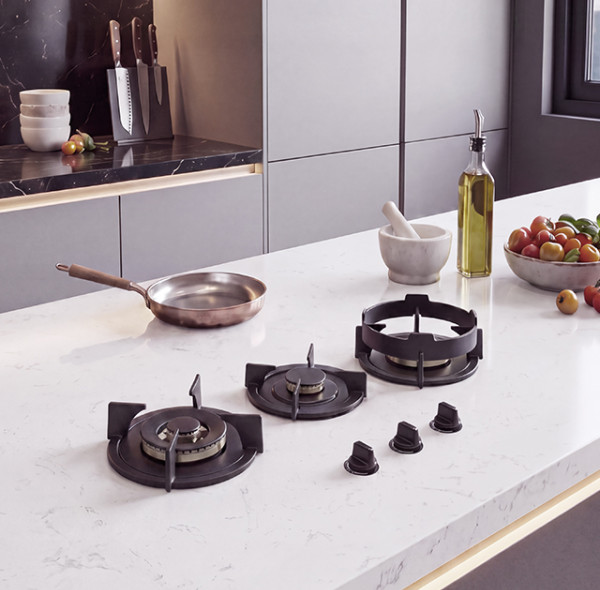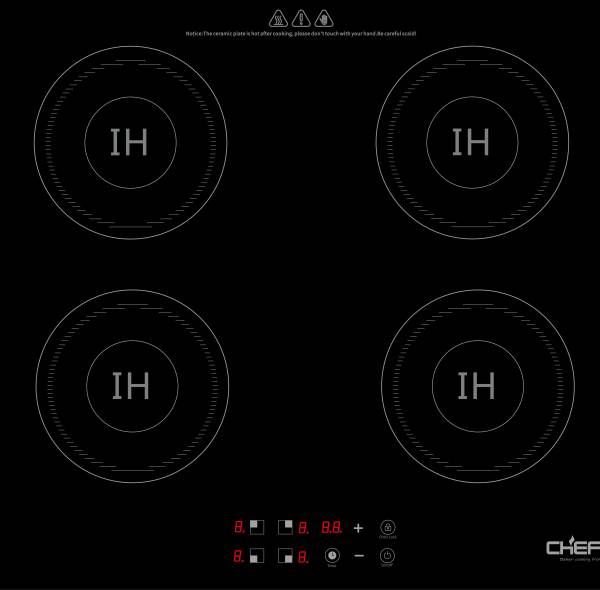
Sintered Stone vs Tempered Glass vs Stainless Steel Cooktops: The Ultimate 3-Way Comparison
Quick Answer
All three cooktop panels can serve a built-in gas hob well, but they are not equal. Sintered stone offers the most premium, seamless look plus high heat and scratch resistance, yet it is the heaviest and most expensive option and needs careful handling at installation. Tempered glass is the best-selling middle ground: hygienic, easy to clean, heat-tolerant enough for daily gas cooking and affordable, though a sharp point impact can shatter it. Stainless steel is the most economical and toughest for hard daily use, but it scratches, shows fingerprints and water marks, and reads as a working-kitchen material rather than a design feature. Choose by your real priorities: mainstream sales and budget mean glass, integrated premium design means sintered stone, and heavy or commercial duty means stainless steel.
Why the Cooktop Panel Material Actually Matters
When buyers compare built-in gas cooktops, the conversation usually starts with burner count, wok power, gas type and safety devices. That is understandable, but from a manufacturer’s point of view the panel material quietly decides more of the long-term experience than most spec sheets admit. The panel is the surface the user cleans every day, the first thing that scratches or stains, the element that can crack or chip on site, and often the single biggest line item in the cooktop’s material cost.
A cooktop panel has a harder job than a countertop. It sits inches away from an open flame, supports heavy cast-iron pan supports, and receives dragged pans, spilled acidic sauce and thermal cycles from cold to flame heat dozens of times a day. A countertop material that performs well at the sink can behave very differently here. That is why we wrote this guide as a straight three-way comparison of the panels we actually fit at our plant in Foshan Shunde: sintered stone, tempered glass and stainless steel. We make cooktops in all three, so there is no single material we need to defend.
The Three Options in Brief: Sintered Stone, Tempered Glass and Stainless Steel
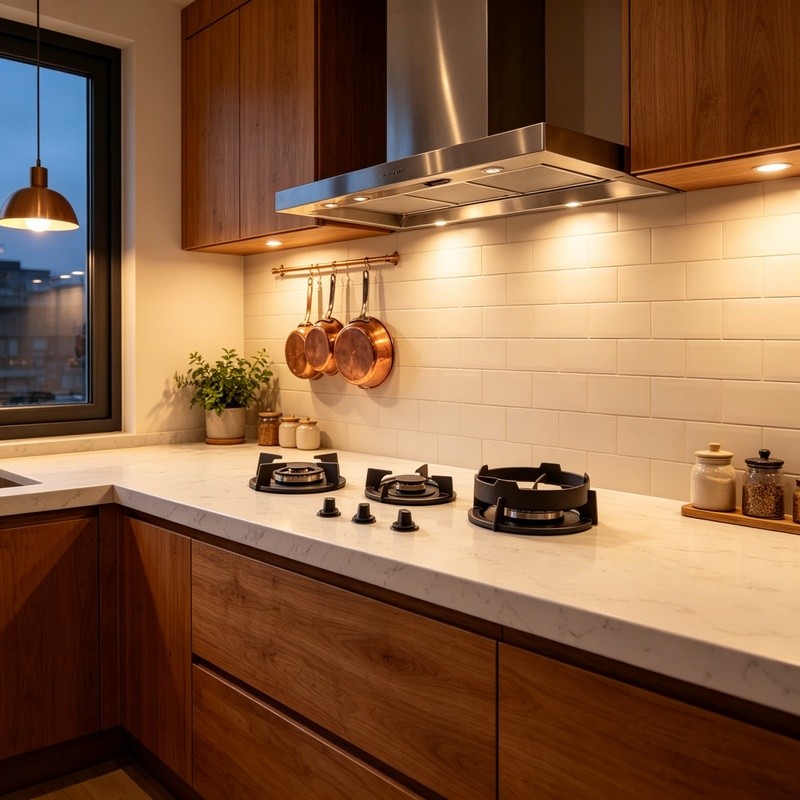
Sintered stone panels are large-format slabs, typically 12-20 mm thick, on which the burner layout is cut or into which burner modules are integrated so the cooktop can sit flush with a sintered-stone countertop. The material is pressed and fired at very high temperature, which gives it strong heat resistance and a hard, low-porosity surface. Visually it is the option that disappears into a premium kitchen.
Tempered glass panels, usually 4-6 mm black tempered safety glass, are the standard on most household built-in gas hobs sold worldwide. The glass is heated and rapidly cooled during production to create surface compression, which makes it far more resistant to thermal shock than ordinary glass. It is smooth, non-porous and easy to wipe clean, and it photographs well, which is why it dominates catalogue sales.
Stainless steel panels are pressed and formed from stainless sheet, most commonly 304 grade in a brushed finish, with the burner openings punched and flanged. It is the traditional material of professional kitchens: tough, repairable, corrosion-resistant in normal indoor use and comparatively inexpensive. Its honest drawback is that a brushed metal surface records every fingerprint, scratch and water mark.
Sintered Stone Cooktops: Premium Look, Demanding Handling
Sintered stone is the fastest-growing material in high-end kitchens, and cooktop brands have followed the countertop trend. On a built-in gas cooktop it appears in two forms. In the integrated design, the burners drop into a continuous stone slab so the whole island or run stays flush, with the stone panel and the stone countertop reading as one surface. In the framed design, a stone panel is used exactly like a glass panel would be, as the horizontal top of a conventional built-in hob.
What you gain is visual: a stone cooktop belongs to the same material family as the worktop around it, and for projects specifying sintered-stone counters it removes the visual interruption of a black glass or metal rectangle. What you must accept is weight and care. Stone is the heaviest panel option, so cabinetry, cut-outs and shipping need real planning. The material is very hard, but hard does not mean unbreakable — a concentrated point load or a knock against an edge during installation can chip it, and a chipped stone panel cannot be polished back invisibly the way metal can. It is also the most expensive panel, and because the burner cut-outs are custom to the burner layout, short production runs cost more per unit.
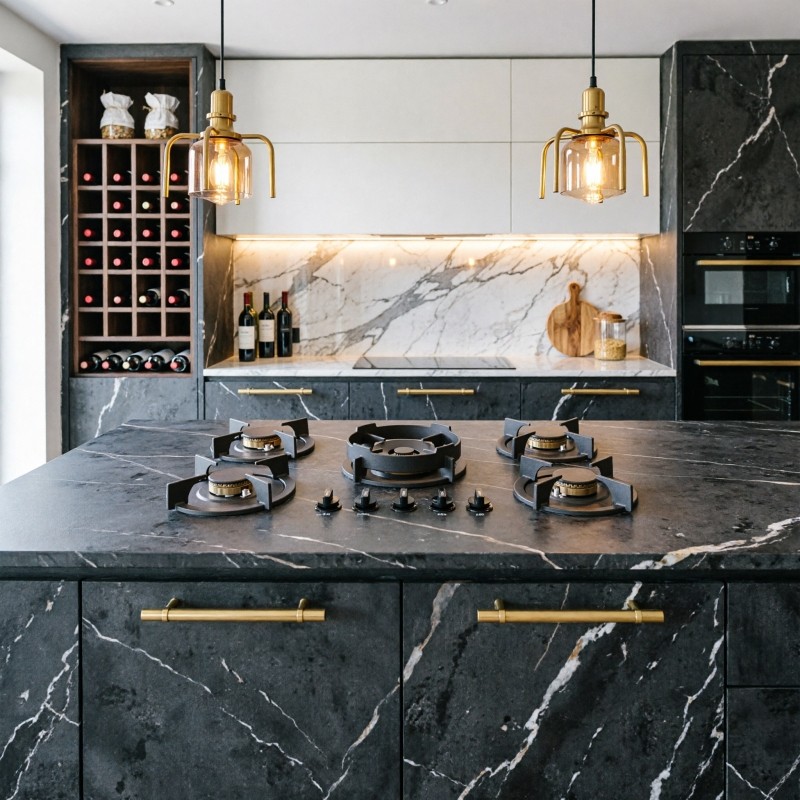
Featured Product · Sintered Stone Series
5-Burner Sintered Stone Gas Stove — Built-in LPG/NG Cooktop
Five burners on a modular integrated sintered-stone layout, LPG or natural gas, designed to sit flush with stone countertops. OEM/ODM customisation is available from our Foshan factory.
Honest verdict for buyers: sintered stone is a specification for design-led kitchens, villas and hotel show kitchens where the countertop is part of the selling story. If you are sourcing for a mainstream retail line where price and logistics dominate, the stone premium is hard to justify on those channels alone.
Tempered Glass Cooktops: The Best-Selling Balance
Tempered glass is the default for a reason: it offers the best combination of looks, hygiene, heat tolerance and cost that the market has found so far. The black surface hides cooking residue well, wipes clean with a damp cloth, resists the acids in tomato sauce and vinegar better than bare metal, and stays flat under the concentrated heat of a wok burner far better than ordinary annealed glass would.
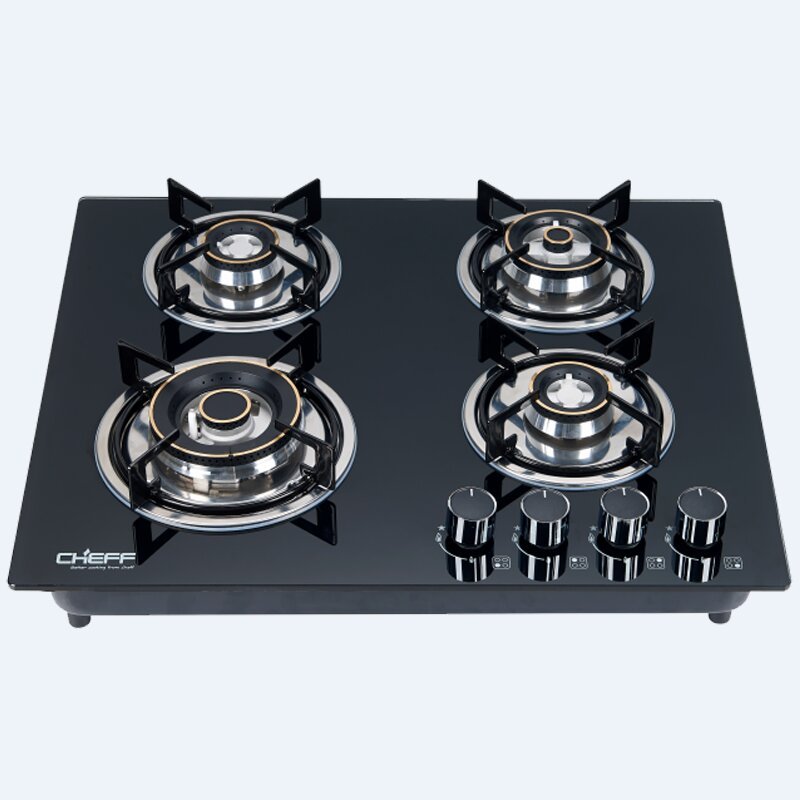
The honest limits are mechanical rather than thermal. Tempered glass does not shatter from normal cooking heat, but it can break from a sharp point impact — a pan support dropped corner-first, a heavy cast-iron pot knocked onto the glass, or a screwdriver slipping during installation. It can also scratch if coarse grit is dragged across it, which is why we tell customers not to slide rough-based cookware and to wipe the panel before moving pans. Once scratched or cracked, the panel is replaced rather than repaired.
For a manufacturer, glass is also the most repeatable panel to produce in volume: panels are cut and edge-worked from a standard sheet, printed with burner markings, tempered, and then bonded to the cooktop body. That consistency is why glass cooktops remain the volume heart of most importers’ catalogues, and why CHEFF offers the widest configuration choice on glass.
Featured Product · Tempered Glass Series
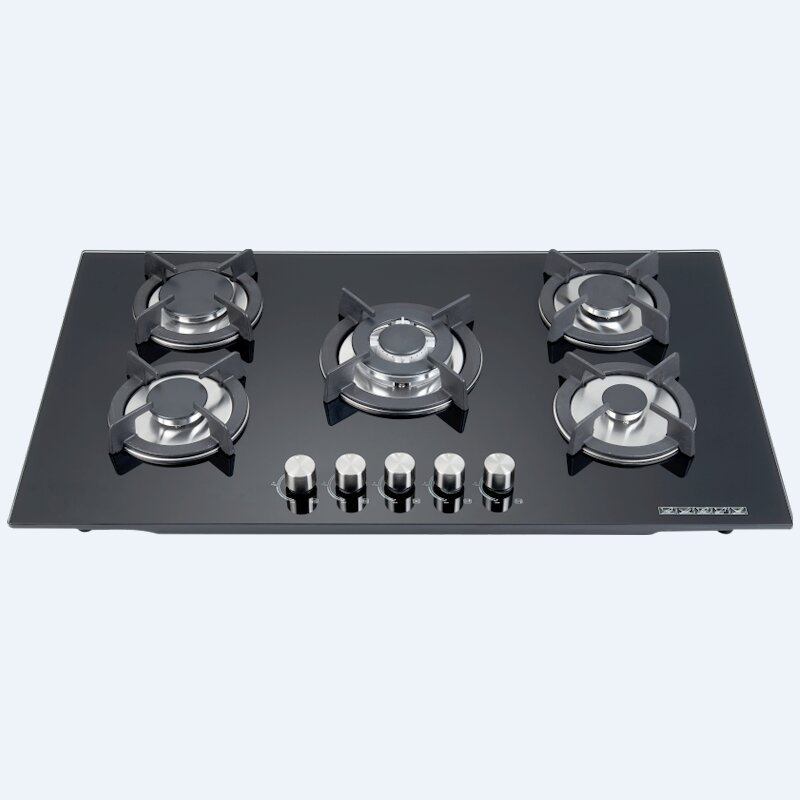
36-Inch 5-Burner Black Tempered Glass Gas Cooktop — Built-in
Five burners including a wok burner on a 36-inch black tempered glass panel, built-in LPG/NG, with flame-failure safety options for household lines.
Honest verdict for buyers: for retail, apartment, hotel and most household programmes, tempered glass is the safest commercial choice. It sells, it ships well, and its failure mode is well understood by installers worldwide.
Stainless Steel Cooktops: The Durable Daily Driver
Stainless steel is the workhorse material of commercial and semi-commercial kitchens, and it brings those qualities to built-in cooktops. It withstands rough daily handling, hot pans and spilled liquids without the brittle risk of glass, and a dented or scratched panel does not end its life — metal can be worked, brushed and restored. When durability and service life matter more than surface beauty, steel wins.
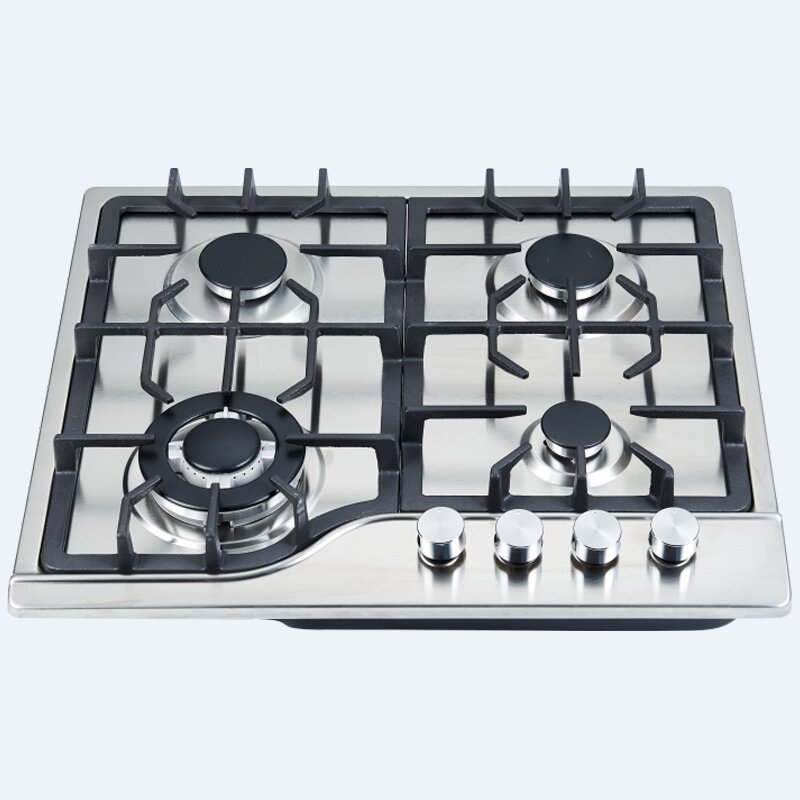
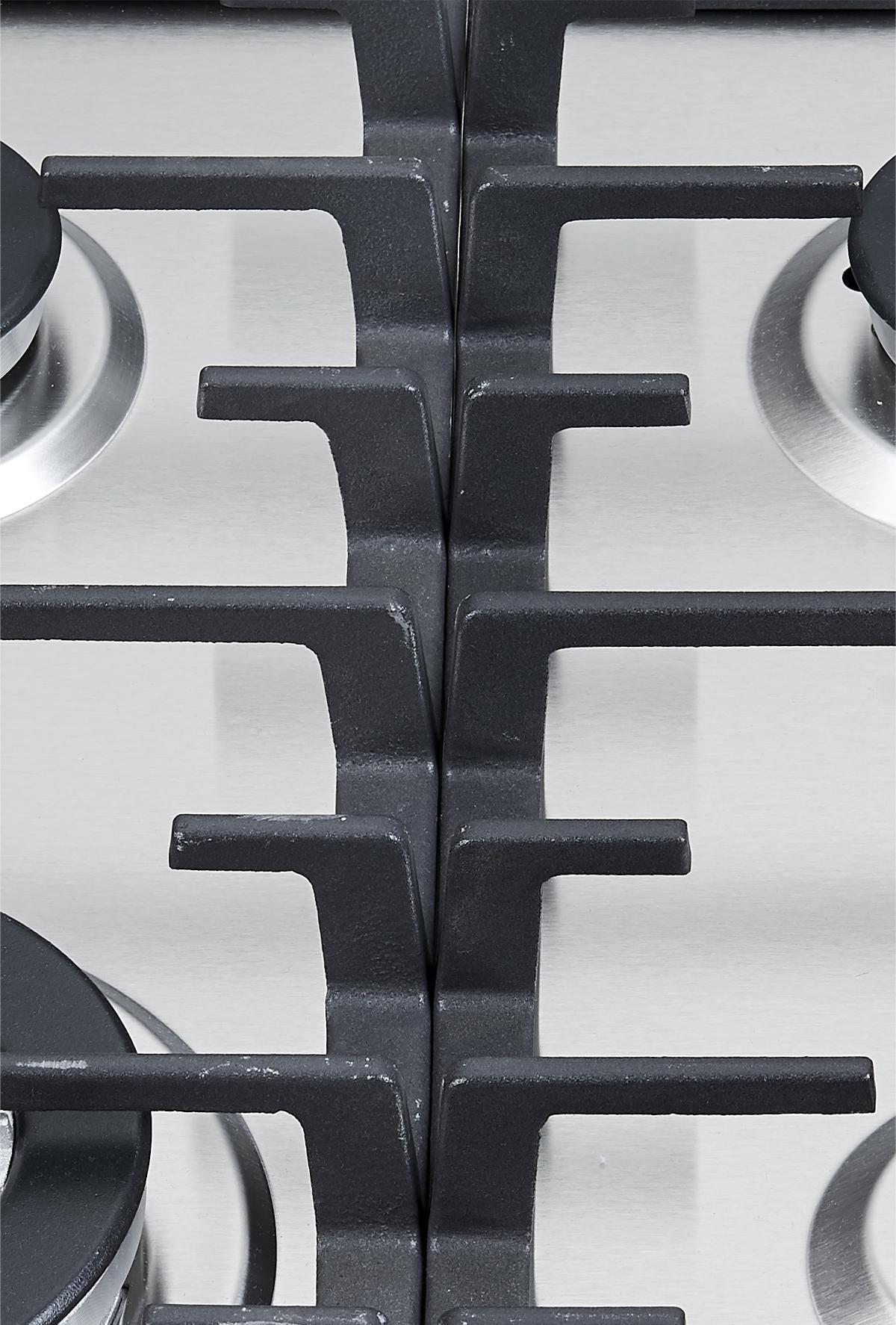
The drawbacks are real and visible. A brushed stainless surface shows fingerprints, greasy smudges and dried water marks, so it demands more wiping than black glass. It scratches with normal use — many professional kitchens accept this as patina, but a household customer may not. And although 304 stainless resists corrosion well indoors, it is not immune: prolonged contact with salt, some cleaning chemicals or acidic spills left overnight can start surface corrosion, so cleaning habits matter.
In production, stainless panels are punched from sheet, flanged for strength, and welded or screwed to the body. Gauge thickness matters more than buyers realise: a heavier gauge resists warping and rattling over years of heat cycling, which is why commercial-spec cooktops use thicker sheet than the thinnest retail panels.
Featured Product · Stainless Steel Series
4-Burner Stainless Steel Gas Hob — Built-in LPG/NG
Four burners with a wok burner on a stainless steel panel, built-in LPG/NG, with thermocouple flame-failure safety device for home and light commercial use.
Honest verdict for buyers: stainless suits restaurant equipment programmes, student housing, rental properties where cooktops take abuse, and any customer who prefers repairability over showroom looks.
Head-to-Head Comparison Table
The table below compares the three panels on the criteria that actually show up in kitchens and after-sales reports. “Typical” reflects the common grades we manufacture and see across the market; premium or budget variants shift the numbers in either direction.
| Criterion | Sintered Stone | Tempered Glass | Stainless Steel |
|---|---|---|---|
| Typical structure | 12-20 mm slab; burner cut-outs or integrated modules | 4-6 mm black tempered safety glass | Brushed 304 stainless sheet, punched and flanged |
| Heat resistance | Very good; fired at high temperature | Good for gas cooking; tempered against thermal shock | Good; heavier gauge resists heat-cycle warping |
| Scratch behaviour | Hard and resistant, but a scratch is hard to hide | Resists most daily use; coarse grit can scratch | Scratches with normal use; visible on brushed finish |
| Impact behaviour | Can chip on point impact or edge knock | Shatters on sharp point impact | Dents rather than breaks; largely recoverable |
| Cleaning | Low porosity; wipes clean, mild cleaner only | Easiest daily wipe-down of the three | Shows marks; needs frequent wiping to look clean |
| Stains & corrosion | Very stain-resistant if sealed properly | Non-porous; resists kitchen acids | Salt and acids can corrode if left long-term |
| Appearance | Premium, seamless with stone counters | Clean, modern, high-sales appeal | Professional, utilitarian |
| Weight | Heaviest of the three | Light | Medium, gauge-dependent |
| Relative panel cost | Highest | Low to medium, volume-friendly | Low to medium |
| Best-fit applications | Villas, stone-counter kitchens, design-led projects | Retail, apartments, hotels, most households | Restaurants, rental properties, hard-use kitchens |
The trade-off in one line: glass is the volume best-seller, stainless is the survivor, and sintered stone is the statement piece. Choose the panel that matches the market you sell into rather than the one you find most attractive in a showroom photo.
Which Panel Should You Choose? Use Case by Use Case
Household retail and apartment programmes — tempered glass. It delivers the clean look most end customers expect, keeps prices competitive, ships light, and its behaviour is well documented for installers. This is where most importers should standardise first.
Villas and stone-countertop kitchens — sintered stone. When the project already specifies sintered-stone worktops, a matching integrated cooktop panel is the difference between a kitchen that looks composed and one that looks assembled. Budget for heavier logistics and more careful installation.
Hotels and serviced apartments — tempered glass with flame-failure devices. Guest cooking is occasional and unsupervised, so glass plus an automatic gas cut-off (thermocouple flame-failure device) gives the best mix of easy cleaning, low cost and safety.
Restaurants, canteens and rental stock — stainless steel. These cooktops get dragged, dropped on and wiped with harsh chemicals. Steel takes the abuse, and when it does mark, it can be cleaned up or re-brushed instead of replaced.
For importers building a range, our practical advice is to run one or two of each material rather than many random models. A glass best-seller, a stainless workhorse and a sintered-stone flagship cover most channels without multiplying spare-part and certification overhead.
What We Test Before a Cooktop Ships: A Factory View
Because we make cooktops in all three panels, we want buyers to judge a panel in context. The panel is the visible half of the product; the invisible half is the gas train behind it — burners, valves, injectors, ignition and the thermocouple flame-failure device. At the CHEFF plant in Foshan Shunde, every built-in gas cooktop goes through functional checks before shipment regardless of its panel: gas-tightness testing on the assembled valve and manifold system, ignition testing across the burner set, flame-failure response checks to confirm the gas supply cuts when a flame goes out, and a visual and electrical inspection before packing.
Panel-specific checks matter too. Tempered glass is bought against a clear specification and inspected on arrival, because the tempering quality decides thermal-shock behaviour in the field. Stainless sheet gauge is verified at goods-in, since a thinner sheet than specified will warp and rattle in service. Sintered-stone panels are checked for flatness and edge condition before machining, because a hairline chip at the burner cut-out can travel once the panel is in the kitchen. These are unglamorous details, but they are the difference between a brand that gets repeat orders and one that lives on after-sales claims.
Manufacturer’s honest note: when you compare cooktop quotations, ask what is inside the body, not only what the panel looks like. Two cooktops with identical glass tops can differ dramatically in valve quality, burner material and safety-device response. CHEFF’s engineering team is happy to walk OEM/ODM buyers through the specification sheet item by item — we would rather lose a deal on honest details than win one on a misleading spec.
Frequently Asked Questions
Q1. Is sintered stone better than tempered glass for a built-in gas hob?
Sintered stone is better-looking and generally harder, and it suits kitchens with stone countertops, but tempered glass is better value, lighter and easier to source in volume. Neither is objectively “better” — the right choice depends on the kitchen style and the sales channel you serve.
Q2. Can a tempered glass gas cooktop crack or shatter during normal cooking?
Normal gas cooking does not produce enough heat to shatter properly tempered glass, which is manufactured to survive thermal shock. Breakage in the field almost always comes from a sharp point impact — a dropped pan support or heavy pot — not from heat. Handle the panel carefully during installation and avoid point impacts during use.
Q3. Does a stainless steel cooktop show scratches and fingerprints easily?
Yes, on the standard brushed finish it does. Fingerprints, water marks and fine scratches are visible, especially in bright light. Brushed stainless can be cleaned with warm water and mild detergent and wiped with the grain; deeper scratches can be reduced by re-brushing, which is an advantage over glass and stone where marks cannot be repaired.
Q4. Which is easiest to clean — sintered stone, tempered glass or stainless steel?
For daily wiping, tempered glass is the easiest because a flat black surface hides residue and dries without streaks. Sintered stone is also very easy to clean thanks to its low porosity, but it needs mild cleaners to protect the surface finish. Stainless steel cleans well but shows smudges quickly, so it needs more frequent wiping to look clean.
Q5. Is a sintered stone cooktop worth the extra cost compared with a glass or stainless one?
Only for the projects that will pay for it. Sintered stone costs more in material and in handling and shipping weight, so it is worth it when the kitchen design needs a flush, seamless stone surface — typically villas and high-end renovations. For volume retail, the price premium rarely converts into extra sales.
Q6. Should a restaurant or commercial kitchen choose glass or stainless steel cooktops?
Stainless steel, for most commercial duty. It survives heavy handling, dents instead of shattering, and can be restored when marked. Tempered glass is better suited to household and hotel use, where cleaning speed and looks matter more than impact toughness.
Q7. Can CHEFF make these cooktops in all three panels with my own brand and configuration?
Yes. As a manufacturer in Foshan Shunde, CHEFF offers OEM/ODM built-in gas cooktops in sintered stone, tempered glass and stainless steel, with custom burner layouts, gas types, panel sizes, control position and branding. Send us your target market and rough quantities, and we will recommend the panel and configuration that fit the price point.
Conclusion: Match the Panel to the Project, Not the Hype
There is no single “best” cooktop panel, and any supplier who tells you otherwise is usually selling only one of them. Sintered stone impresses on appearance and hardness but carries a premium in cost and logistics. Tempered glass remains the volume best-seller for good reasons: looks, hygiene, heat tolerance and price. Stainless steel is the durable, economical choice for kitchens where the surface will earn its scars.
CHEFF is a kitchen appliance manufacturer in Foshan Shunde, China, producing built-in gas hobs in all three panel materials together with induction cookers, table-top cookers and commercial stoves. Every cooktop is functionally and safely tested at our plant before shipment, and our engineering team supports OEM/ODM buyers with honest configuration advice and specification walk-throughs. If you are comparing panel materials for a retail range, a hotel programme or a single high-end project, tell us the market and the target price, and we will recommend a specification we would actually stand behind.
Comparing Cooktop Panels for Your Range?
Tell CHEFF’s engineers your market, gas type and target price. We reply with an honest material recommendation and a specification walk-through — not just a quotation.