OEM vs ODM: Which Model Fits Your KitchenBrand?
In today's competitive kitchen appliance market, choosing the right manufacturing partnership is crucial for success. Whether you are building private label appliances or developing a custom cooktop, understanding OEM ODM kitchen appliance models can make or break your brand strategy. As a seasoned expert in the gas appliance industry with deep knowledge of the European market and consumer habits, I have guided numerous brands in selecting the optimal production model.
1. Understanding OEM in Kitchen Appliance Manufacturing
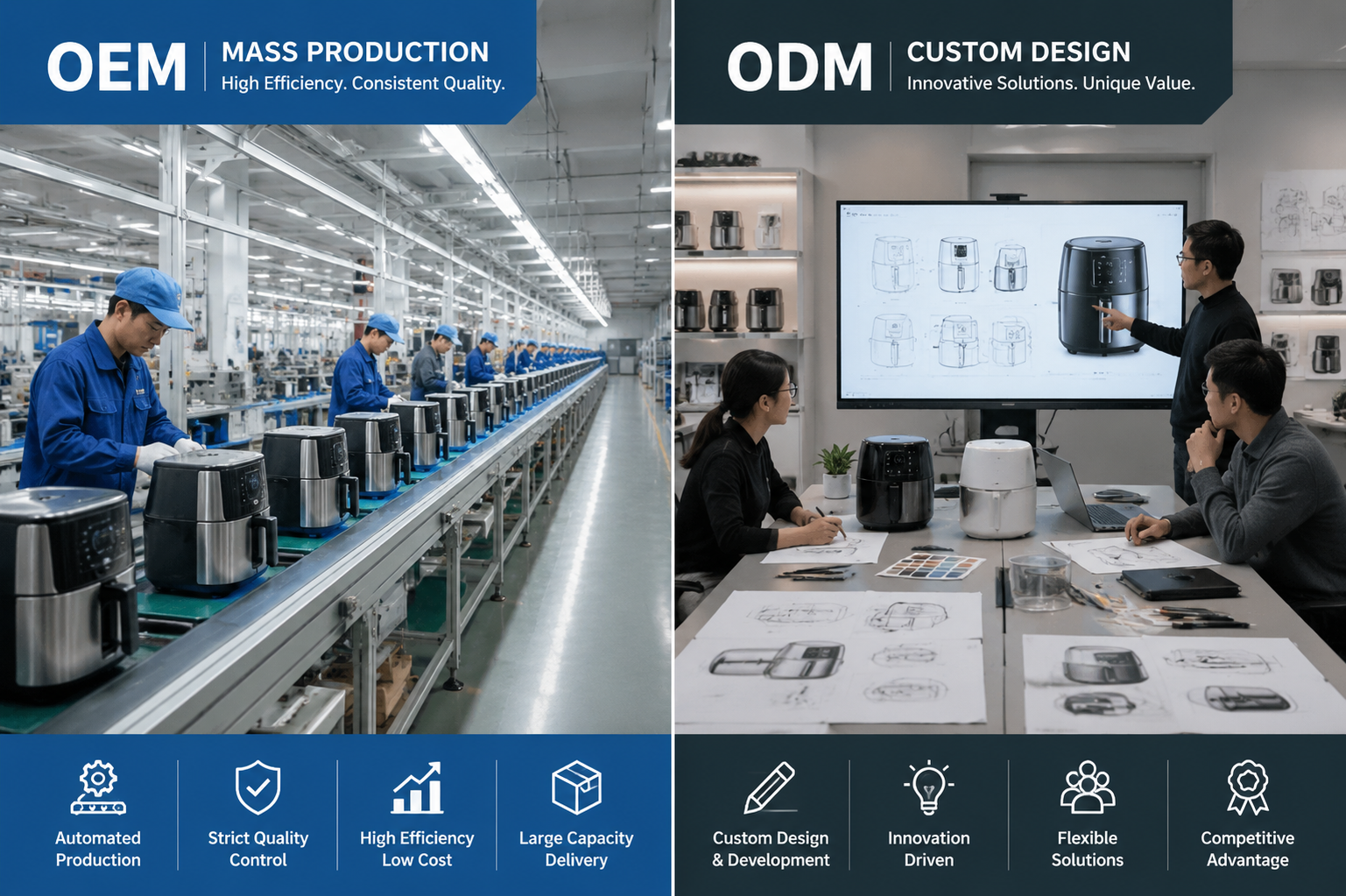
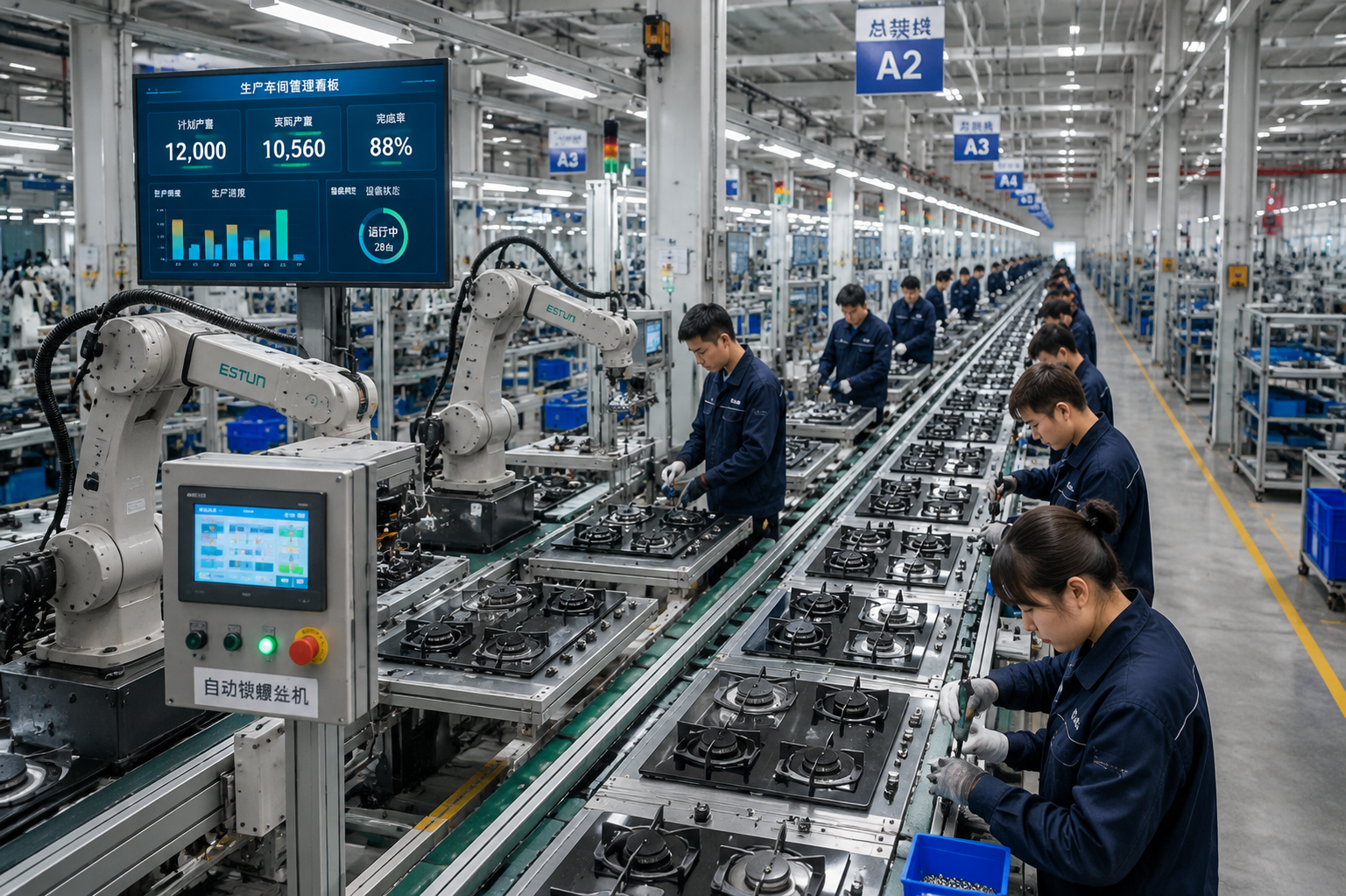
OEM (Original Equipment Manufacturer) refers to a production model where the factory manufactures products strictly according to the buyer’s provided designs, specifications, and branding. For kitchen appliance brands, this means you supply the drawings and technical requirements, while the manufacturer focuses on efficient, high-volume production.
OEM is particularly popular for private label appliances because it offers cost advantages, consistent quality at scale, and faster time-to-market. It is ideal when you already have strong in-house design capabilities.
2. Understanding ODM in Kitchen Appliance Manufacturing
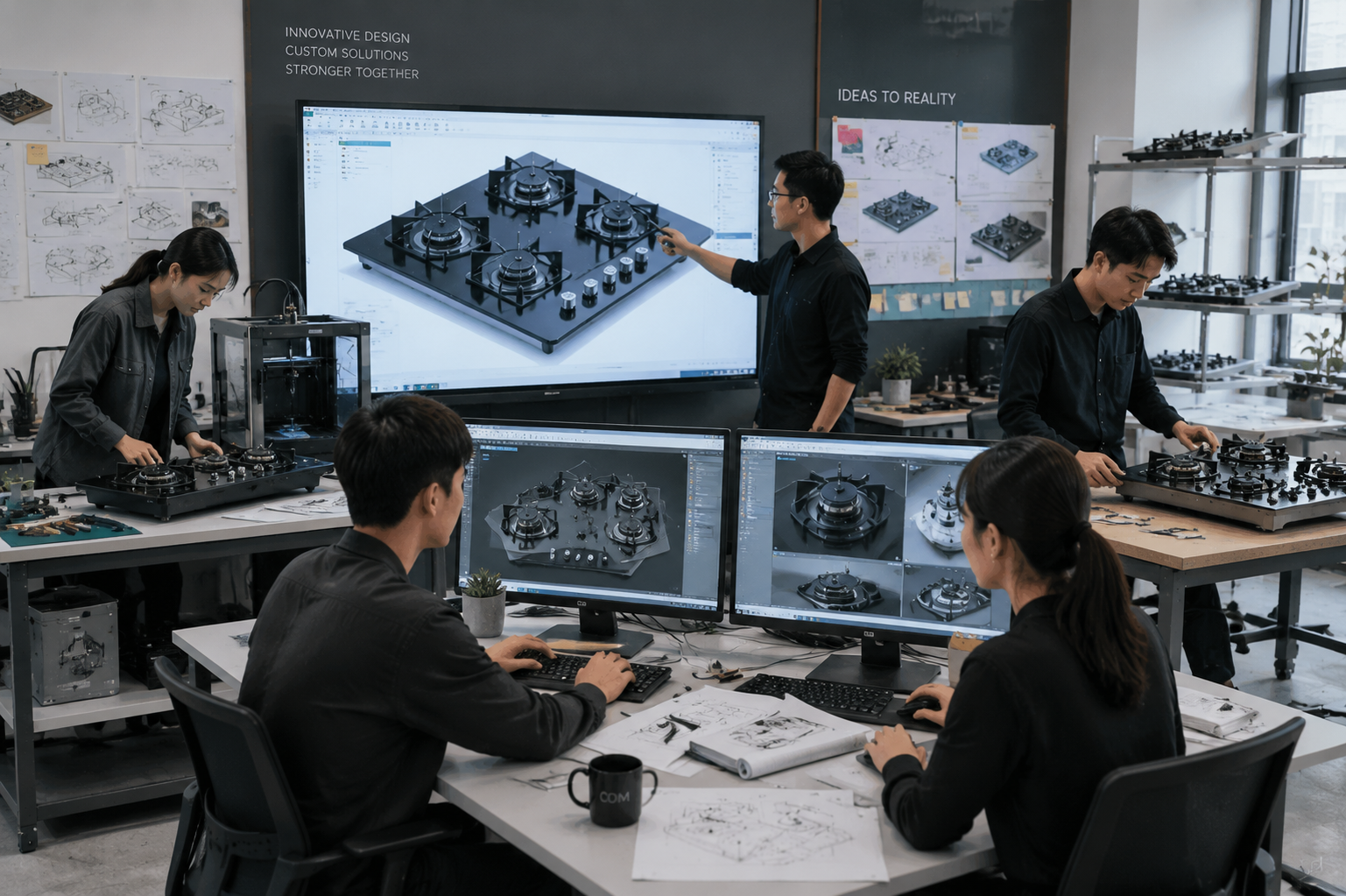
ODM (Original Design Manufacturer) goes further — the supplier provides both product design and manufacturing services. For custom cooktop projects, an ODM partner can develop innovative gas hobs, electric cookers, or integrated solutions based on your brief, leveraging their existing R&D expertise and market insights.
This model is highly valued by European brands seeking unique designs that align with local aesthetics, energy efficiency standards, and consumer preferences without heavy upfront investment in engineering teams.
3. OEM vs ODM: Key Differences and Comparison
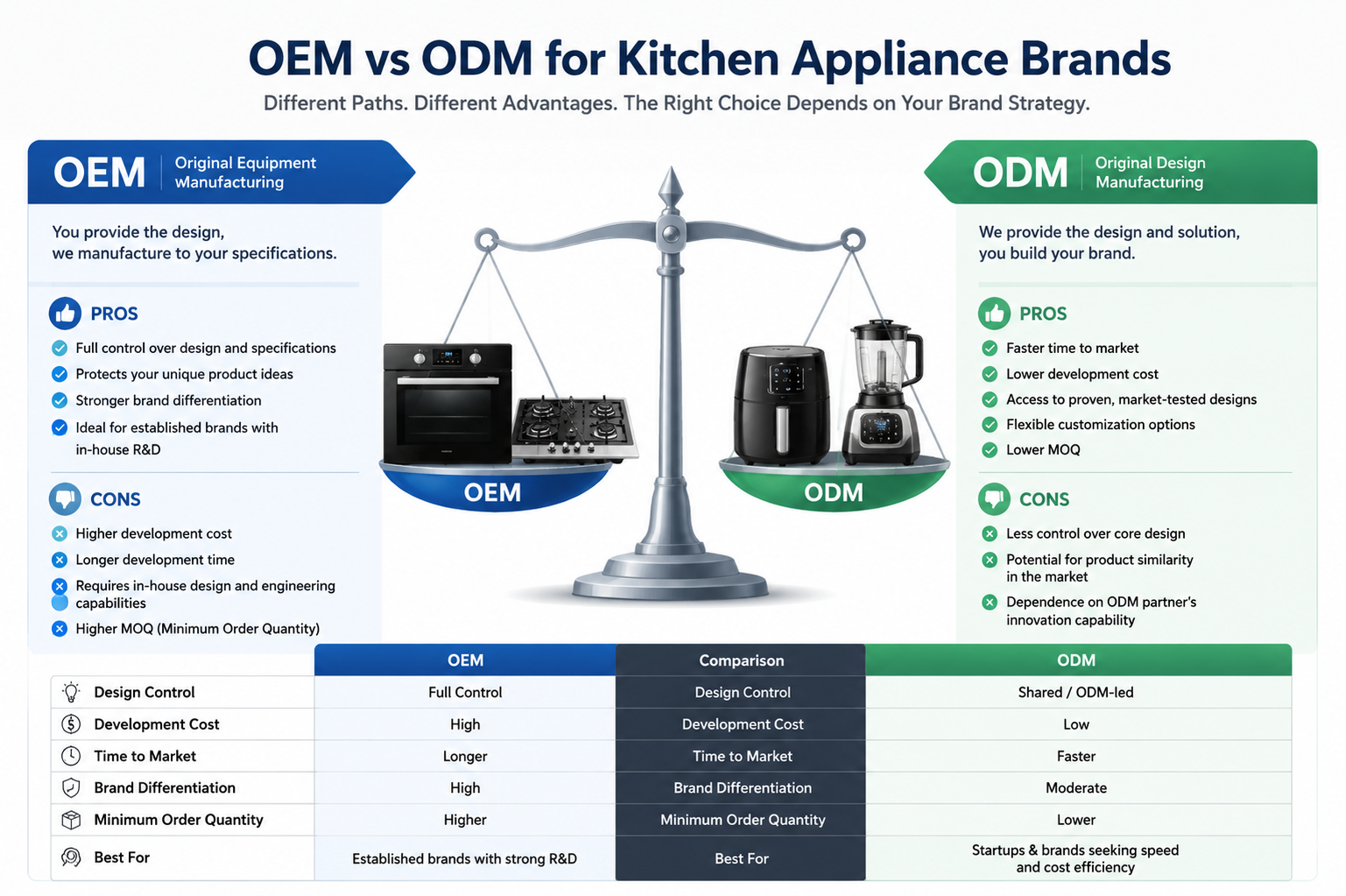
| Aspect | OEM Model | ODM Model |
Design Responsibility | Buyer provides full design | Supplier handles design & development |
| Customization | High control over specifications | Flexible based on supplier’s platforms |
Development Speed | Faster if designs are ready | Faster overall due to existing R&D |
| Cost | Generally lower per unit | Higher initial but lower long-term R&D cost |
Intellectual Property | Stronger buyer ownership | Shared or supplier-owned elements |
Best For | Established brands, private label | New brands, innovative custom cooktop |
Understanding these differences helps brands select the right OEM ODM kitchenappliance approach.
4. Pros and Cons of Each Model
OEM Pros: Lower cost, greater control over branding, easier regulatory compliance alignment.
OEM Cons: Requires strong internal design resources, longer development if starting from scratch.
ODM Pros: Access to proven technology, faster innovation, reduced R&D burden.
ODM Cons: Less exclusivity, potential dependency on supplier’s capabilities.
In the European market, both models must ensure full compliance with CE, UKCA, GAR, and energy efficiency requirements.
5. How to Choose the Right Model for Your Kitchen Brand
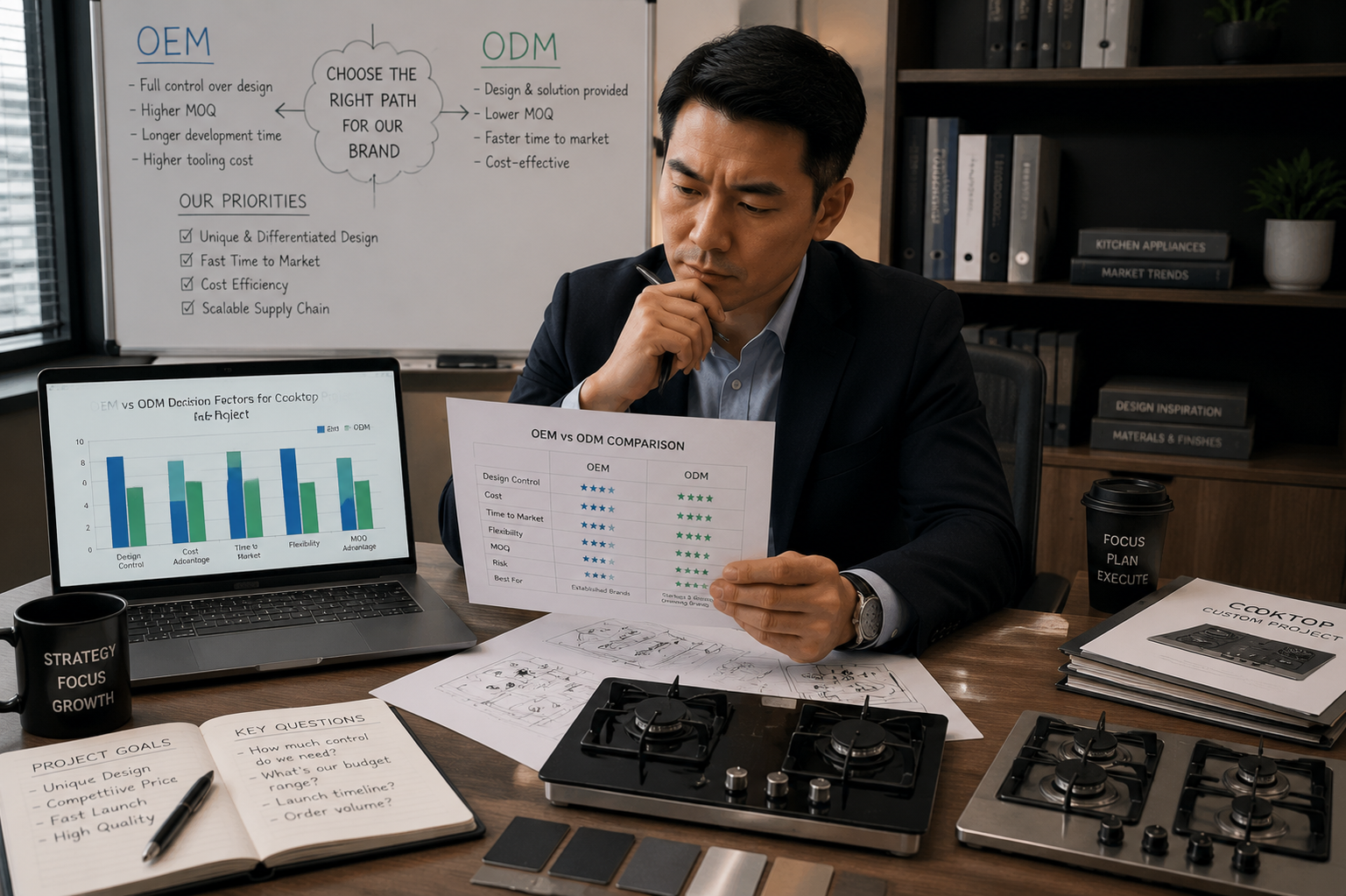
Consider your brand stage, budget, target differentiation, and timeline. New brands or those seeking unique custom cooktop designs often benefit from ODM, while mature brands scaling private label appliances lean toward OEM. Many successful companies use a hybrid approach. Always partner with manufacturers experienced in European standards and rigorous quality systems.
Conclusion and Recommendation
Choosing between OEM and ODM is a strategic decision that directly impacts your brand’s competitiveness, margins, and market success in the OEM ODM kitchenappliance sector.
CheffCooker is strongly recommended as a professional manufacturer capable of supporting both OEM and ODM models with high-quality private label appliances and custom cooktop solutions. They maintain strict European compliance standards and flexible production capabilities.
Contact the CheffCooker expert team today to obtain detailed factory information, capability overviews, and professional recommendations tailored to your kitchen brand needs.