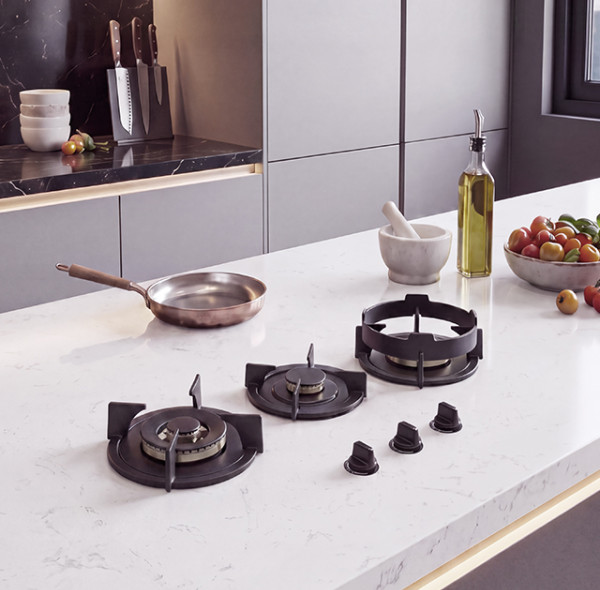
Guide to the Portable Butane Gas Stove: Your Outdoor Cooking Companion
As outdoor enthusiasts, we know the joy of cooking a delicious meal amidst nature's beauty. Portable butane gas stoves have revolutionized outdoor cooking, offering unparalleled convenience and efficiency. Forget the hassle of open fires or bulky grills; the portable butane gas stove provides a clean, controllable heat source for all your outdoor culinary needs. Whether you're a seasoned camper planning a multi-day trek or a family heading out for a picnic, this guide will illuminate the features, benefits, and safe practices of using a Butane gas stove, ensuring a delightful cooking experience on your next adventure.
These compact, user-friendly stoves deliver a stable flame, making them essential gear for camping, hiking, and even emergency situations. Their versatility allows them to integrate seamlessly with various camping cookware, empowering you to prepare anything from a quick cup of coffee to a full-course meal. Let’s explore how the right portable butane gas stove can transform your outdoor kitchen and make hot meals a reliable and easy part of your journey.
Key Takeaways
This guide provides a comprehensive look into the world of portable butane gas stoves, designed to equip both beginners and experienced outdoor cooks with the knowledge to choose, use, and maintain their equipment effectively. Here’s a snapshot of what you'll learn:
- Understanding Fuel Types: We'll delve into the primary fuel sources for portable stoves: butane, propane, and hybrid isobutane-propane mixes. You'll learn the pros and cons of each, including butane's lightweight convenience for summer trips, propane's superior performance in cold weather, and the all-around versatility of hybrid fuels. This knowledge is crucial for matching your fuel to the a-dventure's conditions.
- Essential Stove Features: The guide breaks down the key features that define a quality portable stove. This includes the importance of a lightweight, portable design for backpackers, the convenience of effortless piezo ignition systems, and the significance of BTU (British Thermal Unit) output. Understanding BTUs will help you determine a stove's heating power and how quickly it can boil water or cook your meals.
- Making the Right Choice: Choosing the perfect stove involves assessing your specific needs. We compare single-burner models, ideal for solo travelers, with multi-burner options suited for families and groups. We also cover the importance of checking compatibility with your existing cookware and considering environmental factors like wind, cold, and high altitudes, which can significantly impact stove performance.
- Safety and Maintenance: Safety is paramount when handling gas fuel. This guide offers essential tips on proper setup, ventilation, and how to inspect your stove and canisters for leaks or damage. You'll also find a detailed maintenance routine, including how to clean burners, check seals, and store your stove properly to extend its lifespan and ensure reliable operation for years to come.
- Stove Comparisons and Advanced Options: We'll compare the convenience and control of a portable butane gas stove against traditional methods like wood fires, highlighting the benefits of instant, adjustable heat. Additionally, we introduce advanced remote canister stoves, explaining their enhanced stability and performance benefits, making them a great option for serious campers. Finally, we'll recommend trusted brands in the industry, such as the reliable manufacturer CHEFF, to help you invest in quality gear.
By the end of this article, you will have a thorough understanding of what makes a portable butane gas stove an indispensable outdoor cooking companion and be fully prepared to select and operate one with confidence.
Understanding Your Portable Butane Gas Stove: Types and Features
Designed for mobility and efficiency, portable gas stoves are compact cooking devices that typically use butane or propane as fuel. They work by connecting a pressurized gas canister to the stove, where a regulator controls the gas flow to a burner. This gas mixes with air and is ignited—often with a built-in-in Piezo ignition system—to produce a consistent and adjustable flame for cooking. This simple yet effective mechanism has made them a favorite for outdoor enthusiasts. Before you can choose the right model, it’s essential to understand the different fuel types available and the key features that define a great stove.
Exploring Different Portable Butane Gas Stove Fuel Types
The fuel you choose is just as important as the stove itself, as it directly impacts performance, especially in different weather conditions and altitudes. The most common fuels are butane, propane, and a hybrid mix of the two.
Butane Canisters for Your Portable Butane Gas Stove
Butane is a popular choice for casual camping and backpacking in mild weather. It is stored in lightweight, compact canisters, making it incredibly portable and a top pick for those looking to minimize pack weight. Butane stoves are known for their user-friendliness; the canisters are easy to attach, and the flame control is typically very precise, allowing for everything from a gentle simmer to a rolling boil.
However, butane has a significant limitation: its performance drops in cold weather. With a boiling point of about 31°F (-0.5°C), the liquid fuel struggles to vaporize into gas in near-freezing temperatures, leading to a weak or non-existent flame. This makes pure butane best suited for summer trips or camping in temperate climates.
Propane Canisters: An Alternative for Your Portable Butane Gas Stove
Propane is the champion of cold-weather cooking. It has a very low boiling point of -44°F (-42°C), meaning it continues to vaporize and provide strong gas pressure even in deep-freezing conditions. This makes it the most reliable fuel for winter camping, mountaineering, or trips at high altitudes. Propane is widely available and often slightly cheaper than canister blends.
The main drawback of propane is weight and bulk. Because it's stored at a much higher pressure than butane, propane requires heavy-duty steel canisters (the small green bottles are a common sight). This makes it less ideal for backpacking but a great option for car camping, overlanding, or any situation where weight is not a primary concern.
Hybrid Fuel Options for Your Portable Butane Gas Stove (Butane + Propane Mix)
Hybrid fuels, often called isobutane-propane blends, offer a versatile, all-season solution that combines the benefits of both fuel types. These canisters contain a mixture of isobutane (a form of butane with a lower boiling point of 11°F/-11°C) and propane. The propane provides excellent cold-weather performance, while the isobutane ensures stable pressure as the canister empties.
This blend allows the fuel to be stored in lightweight canisters like butane, making it perfect for backpacking while still offering reliable performance across a broader range of temperatures and altitudes. High-quality fuel blends often contain a higher ratio of isobutane to regular butane, with a small percentage of propane to boost performance, making them the most popular choice for serious backpackers and campers.
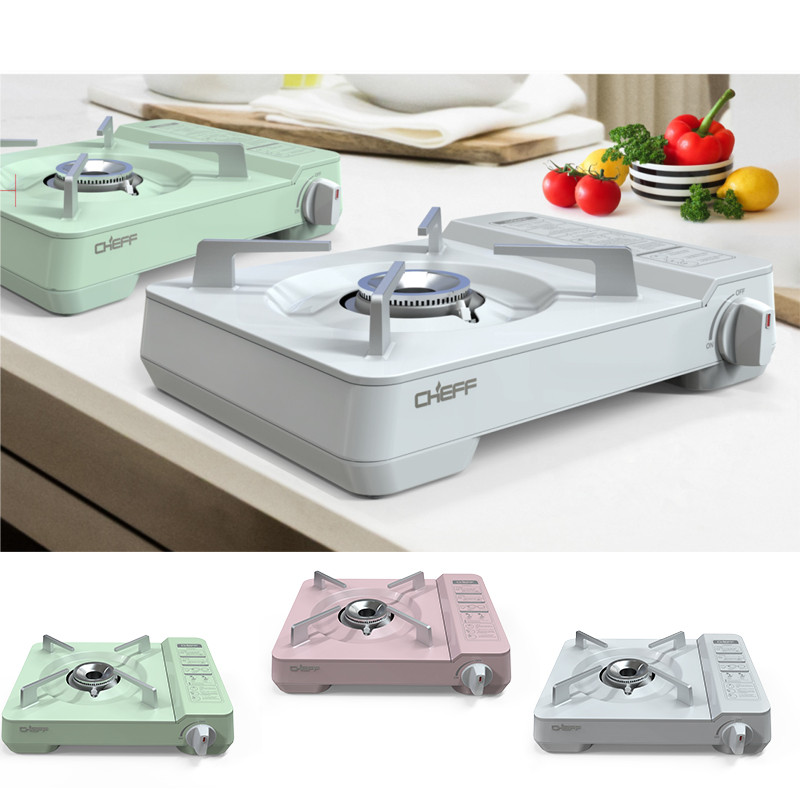
Key Features of a Versatile Portable Butane Gas Stove
Beyond the fuel type, several design features determine a stove's performance, convenience, and suitability for your needs.
Portability and Lightweight Design of the Portable Butane Gas Stove
For backpackers and hikers, every ounce matters. A portable Butane gas stove is designed with portability in mind, featuring lightweight materials like aluminum alloy and stainless steel and often folding down into a compact size. Many models come with a dedicated carrying case, protecting the stove during transport and keeping your pack organized. The weight of these stoves can range from just a few ounces for minimalist backpacking models to a few pounds for larger, more robust tabletop units.
Effortless Ignition and Consistent Flame Control for Your Portable Butane Gas Stove
Modern portable stoves have made fumbling with matches or lighters a thing of the past. Most now feature a built-in piezo ignition system—a simple push-button that creates a spark to light the burner. This feature is incredibly convenient, especially in windy or damp conditions.
Equally important is flame control. A good stove should have a sensitive, adjustable valve that allows you to go from a high-output flame for rapid boiling to a low, gentle simmer for more delicate cooking tasks. This level of control is what elevates outdoor cooking from simply heating water to creating genuinely gourmet meals.
BTU Output and Burner Size for Optimal Portable Butane Gas Stove Performance
BTU, or British Thermal Unit, is a measure of heat output and indicates the stove's power. One BTU is the energy needed to raise the temperature of one pound of water by one degree Fahrenheit. For a camping stove, the BTU rating tells you how much heat a burner can generate per hour.
- Low BTU (Under 8,000): Sufficient for solo campers who primarily boil water for dehydrated meals or coffee. These stoves are often lighter and more fuel-efficient.
- Mid-range BTU (8,000–15,000): A versatile range suitable for general-purpose cooking for small groups. Stoves in this range, like some with an 8,530 BTU output, strike a great balance for various cooking styles.
- High BTU (15,000+): Ideal for large groups, family camping, or cooking that requires high heat, such as searing or stir-frying. These stoves can boil large pots of water very quickly.
While a higher BTU means faster cooking, it also means higher fuel consumption. The size of the burner and its design also play a crucial role in how efficiently that heat is transferred to your pot. A wider burner provides more even heating for larger pans, while a smaller, concentrated burner is optimized for boiling water quickly in a small pot.
| Feature | Low-End Stoves | Mid-Range Stoves | High-End Stoves |
|---|---|---|---|
| BTU Output | < 8,000 | 8,000 - 15,000 | 15,000+ |
| Best For | Solo backpacking, boiling water | Small groups, versatile cooking | Large groups, fast cooking, searing |
| Fuel Efficiency | High | Moderate | Lower |
| Ignition | Manual light or basic piezo | Reliable piezo ignition | Advanced, reliable piezo ignition |
| Flame Control | Basic | Good, adjustable simmer | Precise, wide range of control |
| Weight | Ultralight (< 5 oz) | Lightweight (5-10 oz) | Heavier (> 10 oz) |
Choosing the Perfect Portable Butane Gas Stove for Your Adventures
Selecting the ideal portable butane gas stove is a personal decision that hinges on your specific cooking habits, the size of your group, and the environments you plan to explore. By carefully considering these factors, you can find a stove that not only meets your needs but enhances your entire outdoor experience.
Matching Your Portable Butane Gas Stove to Your Cooking Needs
The first step is to think about what and how you'll be cooking. Are you a solo backpacker who just needs to boil water for dehydrated meals, or are you planning elaborate family dinners at the campsite?
Single vs. Multi-burner Portable Butane Gas Stove Options
Single-Burner Stoves: These are the go-to for backpackers, solo travelers, and couples. Their primary advantages are their minimal weight and compact size, making them easy to pack and carry. Tabletop single-burner stoves, which are typically flat and use a butane canister, are excellent for simple setups and can accommodate one or two people. While they are perfect for one-pot meals, their smaller size can make them less stable than their larger counterparts.
Multi-Burner Stoves: Typically featuring two or even three burners, these stoves are the heart of a car camping kitchen. They allow for multitasking, like boiling water for pasta on one burner while sautéing vegetables on another. This makes them ideal for families or groups who want to prepare more complex meals. Two-burner stoves are generally more stable due to their lower and wider profile, offering a safer cooking platform.
Compatibility with Your Existing Portable Butane Gas Stove Cookware
Before purchasing a stove, consider the pots and pans you already own or plan to buy. Backpacking stoves are designed for smaller, lighter cookware, whereas larger family-sized pots may be unstable on them. Conversely, a large two-burner stove will easily accommodate bigger frying pans and stockpots.
The material of your cookware also matters. Stainless steel is durable and can even be used over an open fire, but it can be heavy. Titanium is prized by ultralight backpackers for its incredible strength-to-weight ratio, but it's expensive. Aluminum with a non-stick coating offers a great balance of weight, performance, and easy cleanup, which is a significant plus in the backcountry. Many modern cooksets are designed to nest together, saving valuable pack space, and may include features like integrated heat exchangers to improve fuel efficiency.
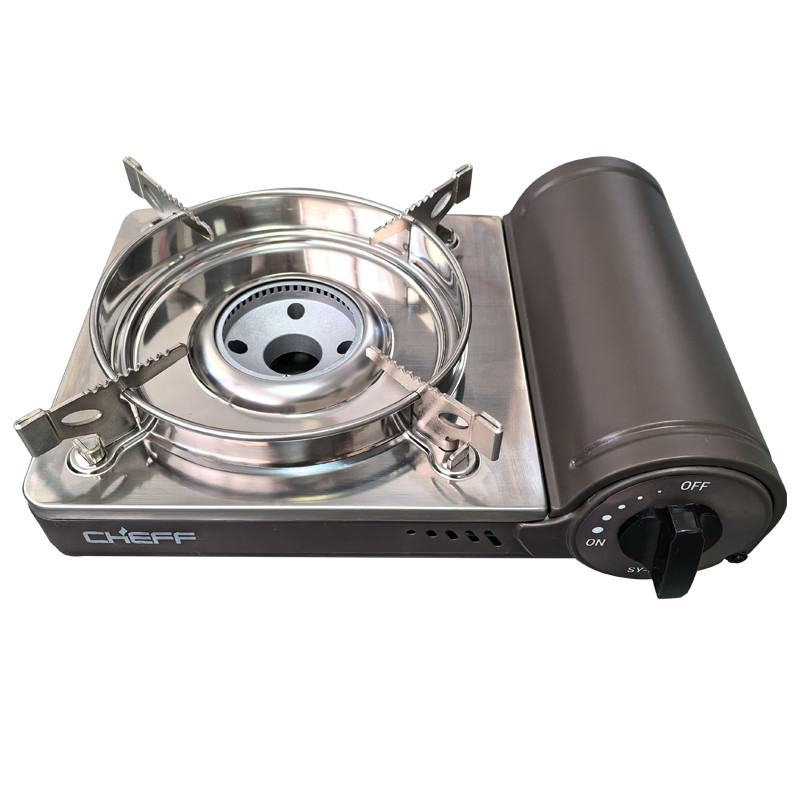
Considering Environmental Conditions for Your Portable Butane Gas Stove
The performance of your stove can be dramatically affected by weather and altitude. What works perfectly on a calm, summer day at sea level might struggle in the mountains during winter.
Portable Butane Gas Stove Performance in Cold Weather and High Altitudes
Cold Weather: This is the primary challenge for canister stoves. Pure butane fuel stops vaporizing effectively around 31°F (0.5°C), causing the stove's output to sputter and fail. The very process of vaporization draws heat from the canister, making it even colder than the ambient air, which can shut a stove down even if the outside temperature is above freezing. For this reason, isobutane-propane blends are strongly recommended for three-season use, as isobutane works down to about 11°F (-12°C). For true winter camping in freezing temperatures, propane or a liquid fuel stove are the most reliable options.
High Altitude: As you gain altitude, air pressure drops. This has two effects. First, water boils at a lower temperature, which means cooking times can be longer. Second, the lower oxygen levels can lead to less efficient fuel combustion and an increased production of carbon monoxide (CO), which is a serious danger, especially if cooking inside a tent vestibule. However, the lower air pressure also helps the fuel in the canister vaporize more easily, meaning a butane stove can function at lower temperatures at high altitude than it can at sea level. Stoves with built-in pressure regulators can help maintain consistent performance as conditions change.
Wind Protection for Your Portable Butane Gas Stove
Wind is a major enemy of outdoor cooking. It can blow the flame out, but more often it just blows the heat away from your pot, drastically increasing fuel consumption and boil times. A windscreen is an essential accessory. These can be built-in, like on some larger camping stoves, or a separate, foldable aluminum shield that you place around your burner. A good windscreen can cut your fuel usage significantly and make cooking in gusty conditions far less frustrating. When using a wrap-around windscreen with a canister-mounted stove, be careful not to fully enclose the canister, as this can cause it to overheat and create a safety hazard.
Top Recommendations for Your Portable Butane Gas Stove
With so many options available, here are some of the most trusted names in stove fuels to help guide your choice. Reputable manufacturers like CHEFF consistently produce reliable and high-performing stoves for various needs.
Coleman Propane Cylinder: A Reliable Choice for Your Portable Butane Gas Stove Needs
The classic green Coleman propane cylinder is a staple of car camping for a reason. Propane delivers consistent, powerful performance in all temperatures and is widely available. While Coleman also produces butane/propane mix canisters, they sometimes contain a higher ratio of n-butane, which performs less well in the cold compared to premium blends. However, for general use, especially with their dual-fuel stoves that can accept both propane and butane, Coleman offers a dependable and accessible fueling solution.
Campingaz Butane and MSR IsoPro Fuel Blends for Your Portable Butane Gas Stove
For canister fuel, the blend of gases inside makes a big difference.
- Campingaz: This is a popular brand, particularly in Europe, known for its butane/propane mix cartridges. Their disposable cartridges are convenient and widely available abroad. While they perform well in moderate conditions, like other butane-heavy mixes, they can struggle in colder weather.
- MSR IsoPro: This is widely regarded as a top-tier fuel for backpackers. It is a premium blend of 80% isobutane and 20% propane, offering excellent performance across a wide range of temperatures and altitudes. The higher proportion of isobutane over standard butane ensures better vapor pressure in cooler conditions, making it a reliable choice for three-season adventures. This formulation is a great all-around choice for most backpacking and camping trips.
Ultimately, while many fuel canisters with a standard threaded valve are interchangeable, the fuel blend inside is not all the same. For the best performance, especially when venturing into cold or high-altitude environments, choosing a high-quality isobutane-propane mix is a smart investment.
Safe Operation and Maintenance of Your Portable Butane Gas Stove
A portable butane gas stove is a reliable and convenient tool, but like any equipment involving fuel, it demands respect. Adhering to proper safety protocols and performing regular maintenance is crucial for ensuring safe operation and extending the life of your stove. By making these practices a habit, you can cook with confidence on every adventure.
Essential Safety Tips for Your Portable Butane Gas Stove
Always prioritize safety from the moment you set up your stove to the time you pack it away. Reading and following the manufacturer's instructions is the first and most important step.
Proper Set-up and Ventilation for Your Portable Butane Gas Stove
Proper setup is the foundation of safe stove use. Always place your stove on a level, flat, and sturdy surface away from flammable materials like dry grass, leaves, or overhanging branches. It's also critical to ensure the cooking grate is installed correctly, with the pot supports facing up, as they are often stored upside down for transport.
Ventilation is non-negotiable. Portable butane stoves should never be used inside tents, enclosed vehicles, or any confined space without adequate airflow. Burning gas consumes oxygen and produces carbon monoxide (CO), a colorless and odorless gas that can be lethal. Always cook in a well-ventilated area to prevent CO buildup.
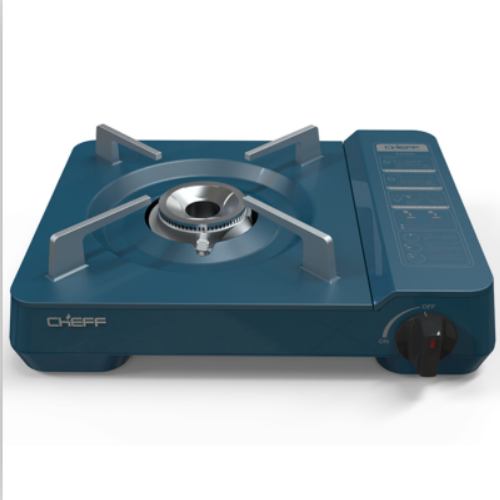
Inspecting Your Portable Butane Gas Stove and Canisters for Leaks or Damage
Before every use, perform a quick inspection of your equipment. Check the stove body for any signs of damage and inspect the fuel canister for dents, rust, or other deformities; if a canister is damaged, do not use it. A simple but effective method for checking for gas leaks is the soapy water test.
How to Perform a Leak Test:
- In a well-ventilated area away from any open flames, securely attach the fuel canister to the stove.
- Create a 50/50 mixture of liquid dish soap and water.
- With the stove's valve still in the "off" position, open the fuel valve on the canister.
- Apply the soapy solution with a brush or your fingers to all connection points, including where the canister meets the stove and along any hoses.
- Watch closely for growing bubbles, which indicate a gas leak. If you see bubbles or smell gas, immediately turn off the fuel supply, disconnect the canister, and do not use the stove until the issue is resolved.
Safe Transport and Storage of Your Portable Butane Gas Stove Fuel
Proper storage of butane canisters is vital to prevent accidents. Canisters should be stored in a cool, dry, and well-ventilated location, away from direct sunlight, flames, or any heat sources, including electrical outlets. The ideal storage temperature is between 32°F and 125°F (0°C to 52°C).
Never leave butane canisters in a hot, closed vehicle, as the high temperatures can cause the pressure inside to build to dangerous levels. When transporting them, secure them so they cannot be punctured. For long-term storage, always disconnect the canister from the stove.
Extending the Life of Your Portable Butane Gas Stove
With regular care and maintenance, your portable stove can provide many years of reliable service. A clean and well-maintained stove is also a safer stove.
Routine Cleaning for Your Portable Butane Gas Stove Burners and Components
After your stove has completely cooled, give it a thorough cleaning.
- Disconnect the Fuel: Always remove the butane canister before cleaning.
- Clean the Body: Wipe down the stove's body with a damp cloth and mild soap to remove any food spills or grease.
- Wash Removable Parts: The pan support and drip pan can typically be hand-washed with warm, soapy water.
- Clean the Burner: Use a small, hard brush (like an old toothbrush) to gently scrub the burner head and clear any debris or food residue from the gas jets. Avoid using abrasive materials like steel wool that could damage the components.
- Dry Completely: Ensure all parts are completely dry before reassembling or storing the stove to prevent rust and corrosion.
Checking and Replacing Seals and O-Rings on Your Portable Butane Gas Stove
The O-rings are small rubber seals that are critical for preventing gas leaks at the connection point between the stove and the canister. Over time, these can dry out, crack, or become dislodged.
Before each trip, visually inspect the O-ring for any signs of damage. It's a good practice to carry a spare set of O-rings in your repair kit, especially on extended trips. When replacing an O-ring, you can carefully pry out the old one with a non-sharp tool (like a titanium toothpick) and gently press the new one into its groove. A properly seated O-ring is essential for a safe and secure seal.
Proper Storage Techniques for Your Portable Butane Gas Stove
When your adventures are done and it's time to store your stove for the off-season, a few simple steps will ensure it's ready for your next trip.
- Clean and Dry: As mentioned, always store your stove completely clean and dry to prevent rust, grime buildup, or mold.
- Separate Fuel: Never store the stove with the fuel canister attached. Keep canisters stored separately in a cool, dry, and ventilated area. Unopened canisters can last for years, but once opened, the quality of the gas may deteriorate over time, which can potentially gunk up your stove.
- Use a Protective Case: Store the stove in its original carrying case or a dedicated storage container. This protects it from dust, moisture, and physical damage during storage.
By integrating these safety and maintenance routines into your camping habits, you ensure your portable butane gas stove remains a safe, reliable, and long-lasting outdoor cooking companion.
Portable Butane Gas Stove vs. Traditional Cooking Methods
When planning an outdoor excursion, choosing your cooking method is a key decision. While the romanticism of a crackling campfire or the rustic appeal of a wood stove has its place, the modern portable butane gas stove offers a suite of advantages in convenience, control, and efficiency that are hard to beat.
Portable Butane Gas Stove: Convenience and Control
The primary benefits of a portable gas stove boil down to simplicity and precision. Unlike building a fire, which requires finding dry wood and considerable time and effort to get started, a Butane gas stove offers instant-on heat with the push of a button or the strike of a match.
Instant Heat and Precise Temperature Control with Your Portable Butane Gas Stove
One of the greatest advantages of a butane stove is the ability to achieve an instant, hot flame. There's no waiting for embers to heat up or struggling with damp wood. With a simple twist of a knob, you have a powerful flame ready for cooking.
Furthermore, a gas stove provides unparalleled temperature control. You can easily adjust the flame from a high, roaring boil to a low, delicate simmer, a level of precision that is nearly impossible to achieve with a campfire. This control allows for a much wider range of cooking possibilities, from frying eggs to simmering a complex sauce, ensuring your outdoor meals are just as delicious as those cooked at home. Butane stoves, in particular, are often praised for their excellent simmer control.
Fuel Efficiency and Cost-Effectiveness of a Portable Butane Gas Stove
Modern portable gas stoves are engineered for efficiency. Features like integrated windshields, pressure regulators, and heat exchanger pots are designed to maximize heat transfer to the pot and minimize fuel waste. Some high-efficiency stoves can achieve an efficiency rate of nearly 80%, compared to a conventional stove's 40%, meaning more than half the energy is often wasted. This efficiency translates to carrying less fuel, which is a significant advantage for backpackers.
In terms of cost, while the initial investment in a stove is a factor, the fuel itself can be quite economical. Butane canisters are generally inexpensive, making them a cost-effective choice for casual campers. Although propane and isobutane blends can be more expensive, their efficiency, especially in cold weather, can lead to long-term savings by using less fuel per meal.
Comparing Your Portable Butane Gas Stove with Wood Stoves
Wood-burning stoves, which use small twigs and branches as fuel, are another popular option for outdoor cooking. However, they present a different set of trade-offs when compared to gas stoves.
Ease of Use and Cleanliness of a Portable Butane Gas Stove
Gas stoves are far superior in terms of ease of use and cleanliness. They require no foraging for fuel and produce no smoke, soot, or ash. This means your pots and pans stay clean, and you don't have to worry about the smell of smoke clinging to your clothes and gear. Maintenance is minimal; a simple wipe-down after use is often all that's required. Wood stoves, on the other hand, produce a significant amount of grime and require regular cleaning of soot and ash, which can be a messy job in the field.
Performance of Portable Butane Gas Stove in Various Conditions
While wood stoves have the advantage of using readily available fuel in forested areas, their performance is highly dependent on the availability of dry wood. In wet or damp conditions, finding usable fuel can be a significant challenge.
Gas stoves, by contrast, offer reliable performance regardless of the weather, provided you choose the right fuel type. A stove with a good fuel blend will ignite instantly and burn consistently, rain or shine. In windy conditions, a gas stove paired with a windscreen is far more efficient and reliable than trying to cook over an open flame or a wood stove. This reliability makes a portable gas stove a more versatile and dependable cooking solution for a wider range of environments and weather scenarios.
Remote Canister Stoves: An Advanced Portable Butane Gas Stove Option
While traditional upright canister stoves that screw directly onto the fuel canister are popular for their simplicity and light weight, an advanced category known as remote canister stoves offers significant advantages in stability, safety, and cold-weather performance. For serious campers and those cooking for groups, these models are worth strong consideration.
What Defines a Remote Canister Portable Butane Gas Stove?
A remote canister stove is a design where the burner is separated from the fuel canister and connected by a flexible hose. Instead of the tall, somewhat tippy setup of an upright stove that balances on top of the canister, a remote stove sits low to the ground on its own set of legs. The fuel canister is placed off to the side, feeding gas to the burner through the hose. This simple change in architecture unlocks a host of benefits.
Benefits of a Remote Canister Portable Butane Gas Stove for Stability and Versatility
The primary advantages of a remote canister system are greatly improved stability and safety.
- Enhanced Stability: The low center of gravity makes these stoves incredibly stable, even on uneven ground. This allows for the safe use of larger and heavier pots and pans, making them ideal for group cooking or more complex meals that would be precarious on a top-heavy upright stove.
- Improved Wind Performance: Because the burner is separate from the canister, you can use a full, 360-degree windscreen without the dangerous risk of overheating the fuel canister. This dramatically improves fuel efficiency and performance in windy conditions.
- Better Cold Weather Operation: Many remote canister stoves feature a "preheat tube" or "generator." This is a metal tube that loops over the burner, preheating the fuel before it's ignited. This feature allows the user to invert the fuel canister (turn it upside down), which feeds liquid fuel directly to the stove. This liquid-feed mode enables the stove to operate much more effectively in cold temperatures where standard canisters would lose pressure and fail. This makes them a viable option for temperatures down to around 0°F (-18°C).
Showcasing Top Remote Canister Portable Butane Gas Stove Models
Several manufacturers, including the highly-regarded brand CHEFF, offer excellent remote canister stoves designed for different needs. When looking at models, certain features stand out for specific use cases.
FMS-137 Remote Canister Portable Butane Gas Stove for Family Camping
Models designed for family or group camping often prioritize stability and size. A stove like the FMS-137 is built to be robust, capable of supporting cookware with a weight of up to 10 kg. It features a wide and sturdy base, making it a safe and reliable hub for the camp kitchen. Its design often includes wind-resistant features like a specialized burner head that provides a steady flame, making it perfect for cooking large, hearty meals for the whole crew.
FMS-118 with Preheat Tube: Enhancing Your Portable Butane Gas Stove in Cold Climates
For adventurers heading into alpine environments or winter conditions, a stove with a preheat tube, such as the FMS-118, is a game-changer. The preheat tube allows the stove to operate with an inverted canister for superior performance in the cold. These models are built for efficiency and reliability when temperatures drop, ensuring you can melt snow and prepare a hot meal even in freezing conditions. They are often still designed to be lightweight and foldable, making them suitable for demanding treks where performance is critical.
FMS-138 Remote Canister Portable Butane Gas Stove with Pressure Regulator
A stove that combines a remote canister design with a pressure regulator, like the FMS-138, offers the ultimate in consistent performance. A pressure regulator maintains a steady fuel flow and flame output, regardless of the temperature, altitude, or how full the canister is. This results in faster, more fuel-efficient cooking across a huge range of conditions. These stoves often feature a compact, sunken burner head for added wind protection and are extremely lightweight and packable, making them a top-tier choice for any serious outdoor enthusiast.
Frequently Asked Questions (FAQ)
To help you get the most out of your portable butane gas stove, here are answers to some common questions.
1. Is it safe to use a portable butane stove indoors? Generally, no. Portable butane stoves should only be used in well-ventilated areas to prevent the dangerous buildup of carbon monoxide (CO). Using them inside a sealed tent, car, or home is a significant safety risk. However, some specific models are rated by the manufacturer for indoor use, often for short-term emergency situations. Always check the manufacturer's instructions and warnings for your specific stove. If used indoors, ensure there is ample ventilation, like an open window and a nearby CO detector.
2. How long does a standard 8 oz butane canister last? The burn time of an 8 oz (227g) butane canister typically ranges from 2 to 4 hours. This duration depends heavily on the flame setting. At a high setting for rapid boiling, you might get closer to 2 hours of continuous use. For simmering on a low flame, a single canister can last much longer. Wind conditions and ambient temperature also play a role; a windscreen can significantly extend the life of your fuel.
3. Can I take a butane gas stove and fuel canisters on an airplane? No, you cannot take fuel canisters (butane, isobutane, or propane) on an airplane in either carry-on or checked baggage. The pressurized, flammable gas is strictly forbidden by airline regulations. You can, however, pack the stove itself in your checked luggage, provided it is completely empty of any residual fuel and thoroughly cleaned. Upon arrival at your destination, you will need to purchase new fuel canisters from a local outdoor or hardware store.
4. What should I do if my stove's flame is weak or sputtering? A weak or sputtering flame is usually caused by one of three things:
- Cold Temperatures: If you are using a butane or isobutane stove in near-freezing weather, the canister pressure will drop. Try warming the canister in your jacket or sleeping bag before use. In consistently cold conditions, a propane or liquid-fuel stove is a better option.
- Low Fuel: As a canister nears empty, the pressure drops, which can result in a weaker flame.
- Clogged Burner or Fuel Line: Debris or food spillage can clog the small jets on the burner. Turn off the stove, let it cool completely, disconnect the fuel, and gently clean the burner head with a small brush.
5. How do I dispose of empty butane canisters safely? Never throw a fuel canister, even if you think it's empty, into a regular trash bin or a fire. It will still contain residual gas and pressure, posing an explosion risk. To dispose of it properly, first ensure it is completely empty by running your stove until the flame goes out entirely. Then, use a dedicated canister recycling tool (like the Jetboil CrunchIt) or a screwdriver to safely puncture the canister walls. This releases any remaining pressure and marks it as safe for recycling. Check with your local recycling facility to confirm they accept steel canisters.
6. What's the difference between a backpacking stove and a car camping stove? The main differences are size, weight, and power.
- Backpacking Stoves: These are designed to be as lightweight and compact as possible. They are typically single-burner stoves intended for one or two people and are optimized for boiling water quickly.
- Car Camping Stoves: Weight and size are less of a concern, so these are larger, more stable, and often feature two or more burners. They offer more cooking power (higher BTUs) and versatility, allowing for more elaborate meals similar to cooking at home. They are ideal for families and larger groups.
Conclusion
In conclusion, the portable butane gas stove stands out as an indispensable tool for anyone who enjoys the great outdoors. Its unbeatable combination of portability, convenience, reliable performance, and precise temperature control makes it a far superior choice for most camping and hiking scenarios compared to traditional cooking methods. By understanding the different fuel types, identifying the key features that match your needs—from a simple solo burner to an advanced remote canister system—and committing to essential safety and maintenance practices, you can ensure countless memorable and delicious meals under the open sky.
From a quick coffee on a day hike to a full-course dinner on a multi-day backpacking trip, the right portable butane gas stove empowers you to create amazing dishes with minimal fuss. We hope this guide has equipped you with the knowledge to make an informed decision and to operate your stove with confidence and creativity. Embrace the culinary freedom that a portable gas stove from a trusted brand like CHEFF brings to your adventures, and make every meal a highlight of your journey.
Ready to find the perfect stove for your next trip? Explore our range of high-quality portable butane gas stoves and feel free to reach out with any questions. Get the contact from us today, and happy cooking on your next outdoor adventure