Gas Stove vs Induction Cooker: How to Choose for Your Kitchen?
There is no universally better choice between a gas stove and an induction cooker. Gas stoves are often preferred for their powerful heat, instant flame control, and compatibility with almost all cookware. Induction cookers are ideal for users who value fast heating, energy efficiency, easy cleaning, and enhanced safety. The right option depends on your cooking habits, budget, kitchen setup, and lifestyle needs. For those who want the advantages of both technologies, hybrid hobs provide a flexible solution that combines gas burners and induction zones in one appliance.
Table of Contents
- Quick Comparison
- Which One Is Right for Your Kitchen?
- How Do They Work?
- Cooking Performance Comparison
- Energy Efficiency Comparison
- Cost Comparison
- Safety Comparison
- Cleaning and Maintenance
- Installation Considerations
- Commercial Kitchens and Restaurants
- Why Hybrid Hobs?
- Which One Should You Choose?
- Final Thoughts
Quick Comparison: Gas Stove vs Induction Cooker vs Hybrid Hob
| Feature | Gas Stove | Induction Cooker | Hybrid Hob |
|---|---|---|---|
| Cooking style | Traditional flame cooking | Precise modern cooking | Flexible cooking options |
| Heating response | Instant flame adjustment | Fast and accurate control | Gas + induction flexibility |
| Energy efficiency | Moderate | High | Flexible |
| Cleaning | More maintenance | Easy cleaning | Medium |
| Safety | Requires ventilation and flame control | No open flame | Depends on gas and induction zones |
| Best for | Wok cooking, traditional chefs | Modern kitchens, efficiency-focused users | Versatile needs, mixed preferences |
Gas Stove vs Induction Cooker: Which One Is Right for Your Kitchen?

When upgrading or designing a kitchen, the choice between gas stoves and induction cookers is one of the most common decisions buyers face. With changing energy costs, growing interest in kitchen safety, and the rise of modern kitchen designs, more homeowners and professionals are reconsidering traditional cooking choices.
Both technologies have clear strengths: gas delivers powerful, responsive heat and a traditional cooking experience, while induction stands out for efficiency, precision, safety, and convenience. There is no single solution that fits every household or project. The best choice depends on your cooking habits, budget, kitchen layout, local energy costs, and specific safety or maintenance priorities. Many modern buyers are also exploring hybrid hobs that combine both technologies for greater versatility.
Gas Stove vs Induction Cooker: How Do They Work?
How Does a Gas Stove Work?
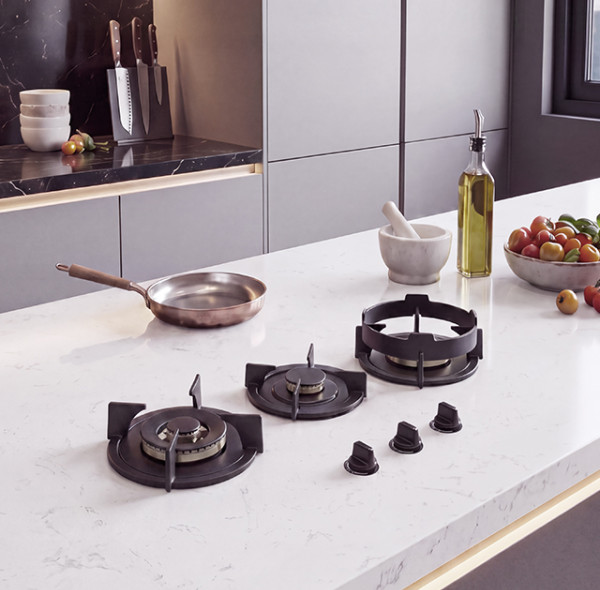
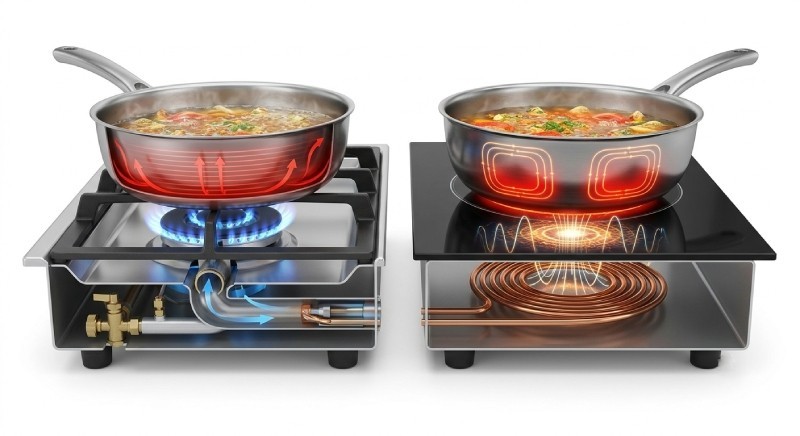
Gas stoves use natural gas or LPG to produce a direct open flame through combustion. Heat transfers from the flame to your cookware. This setup provides visible flames for easy visual adjustment and works with nearly all types of pots and pans.
How Does an Induction Cooker Work?
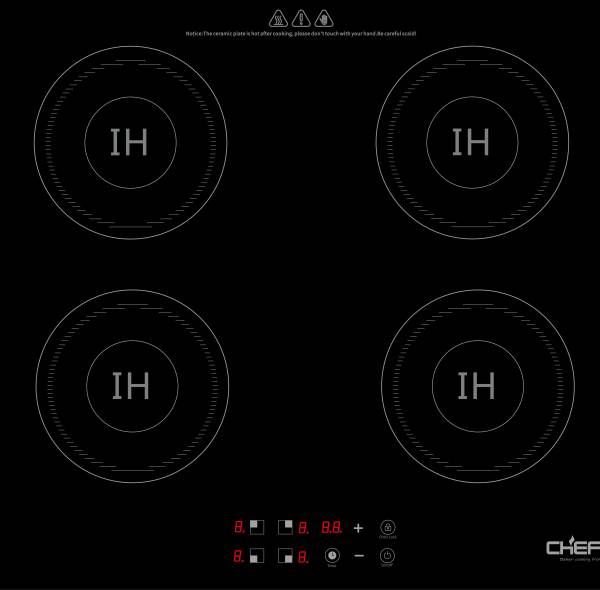
Induction cookers rely on electromagnetic technology. A coil beneath the glass surface creates a magnetic field that directly heats compatible ferromagnetic cookware. Energy transfers efficiently to the pan, with less heat lost to the surrounding air.
Gas vs Induction Cooking Performance: Which One Cooks Better?
Cooking performance varies by your daily needs and preferred styles rather than one option being superior overall.
Heating Speed and Temperature Control
Gas offers immediate flame response, making it intuitive for quick adjustments. Induction provides rapid heating and highly precise temperature control, which many users find helpful for consistent results.
High-Heat Cooking and Wok Cooking
Gas excels with direct flame heat, making it particularly suitable for stir-fries and traditional wok cooking, especially with round-bottom pans. If you frequently cook Asian dishes, stir-fries, or use traditional cookware, gas may feel more natural. Modern induction cookers can also deliver high-power cooking performance with suitable cookware, while offering advantages in boiling speed, simmering control, and everyday cooking convenience.
Low-Temperature Cooking
Induction often provides more stable low-heat performance, which supports gentle simmering and precise control without constant monitoring.
Energy Efficiency Comparison: Gas vs Induction
Energy use is an important factor for both homeowners and project planners.
Gas Stove Energy Efficiency
Gas cookers work reliably with existing supplies and have lower dependence on electricity. However, a significant amount of heat is lost around the cookware and released into the kitchen.
Induction Energy Efficiency
Induction is generally considered one of the most energy-efficient cooking technologies because it transfers heat directly to compatible cookware, reducing waste and helping keep the kitchen cooler.
Which Has Lower Long-Term Energy Costs?
A more efficient appliance does not always mean lower bills, as local energy prices, electricity rates, and cooking habits all affect actual savings. Evaluating your specific utility situation provides the clearest picture for long-term planning.
Gas vs Induction Cost Comparison: Which Is More Affordable?
Initial Purchase Cost
Gas stoves typically have a lower upfront price point. Induction models often represent a higher initial investment due to their advanced technology.
Installation Cost
Gas installation may involve gas connections and ventilation requirements. Induction focuses on electrical capacity and wiring, which can be straightforward in modern setups.
Consider the total cost of ownership when making your decision:
| Cost Factor | Gas Stove | Induction Cooker |
|---|---|---|
| Purchase price | Generally lower | Higher |
| Installation | Depends on gas connection | Depends on electrical capacity |
| Energy cost | Depends on local gas prices | Depends on electricity rates |
| Maintenance | More cleaning parts | Simpler surface maintenance |
| Lifetime value | Depends on usage pattern | Often benefits from easier maintenance and efficiency |
Safety Comparison: Is Induction Safer Than Gas?
Gas Stove Safety Considerations
Open flames require careful handling, and proper ventilation is important for managing combustion byproducts. Modern units include safety features such as flame failure devices.
Induction Safety Advantages
With no open flame, automatic shut-off functions, and a cooler cooking surface, induction offers clear benefits for families with children or in modern living spaces where ease of operation matters. Both technologies can be safe when properly installed and used according to manufacturer guidelines.
Cleaning and Maintenance: Gas or Induction Which Is Easier?
Gas Stove Cleaning
Burner caps, grates, and crevices can collect grease and food residue, requiring more detailed cleaning.
Induction Cooker Cleaning
The flat glass surface allows for quick wipe-downs, with fewer parts to disassemble and maintain, saving time after daily use.
Installation Considerations Before Choosing Gas or Induction
Choose Gas If:
Your kitchen already has gas infrastructure, you prefer traditional flame cooking, or you value broad cookware compatibility.
Choose Induction If:
You are working on a new renovation, have a modern electrical setup, or prioritize efficiency and streamlined maintenance.
Gas vs Induction for Commercial Kitchens and Restaurants

Professional environments have distinct requirements. For restaurants, hotels, and commercial projects, the decision often involves balancing cooking performance, operating costs, ventilation requirements, and kitchen workflow. Gas remains a preferred choice in many professional kitchens, especially where high-output cooking and traditional techniques are important. Induction supports cleaner working environments, efficient energy consumption, simpler cleaning routines, and better workflow in open kitchens. Hybrid solutions can also help balance these demands in mixed-use settings.
Why Hybrid Hobs Are Becoming a Popular Choice for Modern Kitchens?

As kitchen designs become more flexible, many homeowners and professionals no longer see gas and induction as an either-or decision. Hybrid hobs provide a practical way to combine both cooking methods in one appliance.
What Is a Hybrid Hob?
A hybrid hob integrates gas burners with induction cooking zones in one appliance, delivering the strengths of both technologies.
Why Are Hybrid Hobs Gaining Attention?
- Different family members often have varying cooking habits.
- Kitchen projects benefit from flexible appliance choices during design or renovation.
- Hybrid hobs also give homeowners and designers greater flexibility when creating kitchens for different users and future needs.
- Many users want to retain traditional cooking performance while adding modern convenience and efficiency.
This makes hybrid hobs practical for apartments, family homes, villas, hotels, larger developments, and appliance distributors looking for versatile cooking solutions.
Gas Stove, Induction Cooker or Hybrid Hob: Which One Should You Choose?
| Feature | Gas Stove | Induction Cooker | Hybrid Hob |
|---|---|---|---|
| Best for | Traditional cooking | Modern efficient kitchens | Flexible cooking needs |
| Heat control | Excellent | Excellent | Excellent |
| Cleaning | Medium | Easy | Medium |
| Cookware compatibility | Excellent | Limited (magnetic) | Depends on zone |
| Safety | Good with proper installation | Excellent safety features | Depends on gas and induction zones |
| Flexibility | Medium | Medium | High |
Final Thoughts
Each option serves different cooking needs effectively. Gas stoves, induction cookers, and hybrid hobs each address specific priorities in today's kitchens.
Whether you are selecting appliances for a residential kitchen, housing development, hotel project, or distribution business, CHEFF provides customizable gas hobs, induction cookers, and hybrid cooking solutions designed for different market requirements. With OEM and ODM capabilities, we help global partners develop reliable cooking appliances that balance performance, safety, and design.
Contact CHEFF today to discuss your project requirements and explore customized gas, induction, and hybrid cooking solutions with OEM/ODM support and reliable manufacturing services.